Showing posts with label China Series. Geography. Show all posts

November 27, 2019

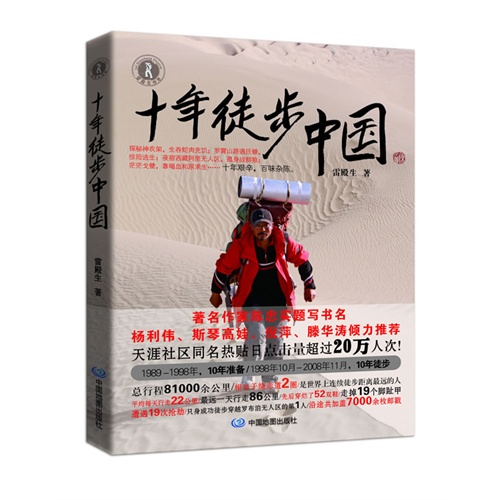
Lop Nur and Lei Diansheng


A man who inspired me ....and a book I hope to read one day....I may have to look for this original book in a books shop some where in China.

The scenes of deserts have been haunting me since I read articles and books by Echo Chen (San Mao) in my younger days.

The Lop Nur was the largest lake in northwestern China before it dried up in 1972 as a result of desertification and environmental degradation.Image result for Lei Diangsheng


    It once nurtured the civilization of Loulan (Kroraina). The ancient city was one of the pivotal stops along the famous Silk Road, but mysteriously disappeared around the third century AD.
    Due to its typical geology, geography and historical values, the Lop Nur has attracted the attention of scientists from home and abroad since the mid 19th century.
    In 1980, Peng Jiamu, a noted Chinese scientist, went missing on his fourth expedition to the Lop Nur and was never found. 
The world-famous ancient city of Loulan, situated in the west of the Lop Nor, was the hub of communications in the Western Regions and occupied a very important position on the ancient Silk Road. The Loulan Kingdom was founded in 176 B.C. and vanished in 630, existing for over 800 years. But the exact location of the Loulan City remained unknown for about 1,000 years. It was not until the beginning of 20th century that it was accidentally discovered by a Uygur in Xinjiang. Thus, the ruins of the thousand-year-sleeping ancient city came to be known again. Now, the Loulan Site is listed as a major culture site and under state protection. Lop Nor is Mongolian and means “the Lake Converging Many Water Source”. Lop Nor is located at the eastern end of the Tarim Basin in the northeast part of Ruoqiang County. It is a terminal lake of the Tarim River, occupying an area of over 3000 square kilometers, the biggest salt migration lake in China. Now it desiccated completely and the lake bed is covered with a hard salt crust, nearby there are marvelous Yardang landscapes. Located on the southern route of the ancient Silk Road, Lop Nor occupied key pass through before coming into the Western Regions in ancient times. A great number of historical remains have been found along the banks of the Lake until toady. Among them is the well known Loulan ancient city, which is situated on the western bank of Lop Nor. This tour will take you to experience adventure in-depth. Most areas of this tour are desolated areas and there are no regular roads for this tour. The group members have to sleep in tents in a way to feel the silence of the desert and you are going to experience a really challenging trip.


February 12, 2016

Foochow Roots : Dream Mountains


My Chong uncles and aunties were an important part of my life when I was growing up in Sibu. Uncle Chong Chong Sing played the church piano in a sorrowful mournful way. We often wondered who taught him the piano. His daughter Dolly became our Wesley Church pianist too.

When we heard that the Chongs originated from Fuqing, China, we thought that it was very very far away from Minqing, and especially from Sibu. But we did not note any difference at all. Except that Grandmother Chong was every inch a Nyonya.

The Chongs are very academic and part of the family was Roman Catholic.

We never learned much about the Chongs because my father lost his mother when he was only 16. And he seldom talked about his mother's family any where. And we had few photos of the family from that period.

In later years I found out more through the grapevine.

I learned more when I visited Fuqing myself.

The county of Fuqing is a lovely place. It has a special mountain called Mr. Shizhu which is 10 km to the west of the Fuqing City. Made up of a series of mountain peaks it is now a very famous tourist place. Its highest peak, Zhuangyuan Peak rises 534 meters above sea level.Image result for Sarawakianaii.blogspot.my Fuqing dream mountains

"The stones on the mountain can retain traces and are frequented by cranes, and its bamboos seem as if they scrape the sky and transform into dragons."

Fuqing is also famous for some very important award dishes like Noodles, seafood soups and other snacks.


Mt. Shizhu Taoist Temple looks like a castle in the air, with a special pink colourization which is very unique in this world. The temple is a shrine to 9 brothers who first practised Dao in Fuzhou. These nine brothers attained immortality, rode on a dragon and manifested themselves on Mt. Shizhu. Many people continue to come to this stone mountain and pray for immortality.

"Quite a number of scholars leisurely visited Mt. Shizhu in the past dynasties. Numerous carved stones on cliffs are still kept on the mountain at present. Zhu Xi of the Song dynasty, Ye Xianggao, Wang Shimao, and Xie Zhaozhe of the Ming dynasty, and Chen Baochen towards the end of the Qing dynasty all left behind precious inscriptions or poetical works. Xu Xiake, the great traveler and geographer of the Ming dynasty, sightsaw Mt. Shizhu out of admiration in middle June in the first Taichang year (1620). He called Mt. Shizhu "the most wonderful of cliffs".

Today, instead of climbing the long footpaths up the mountains for three or four hours, people can use the cable cars.

My paternal grandmother Chong Jin Soon would have heard of Mt. Shuzhu from her parents and grandparents who migrated out of Fuqing (and settled in Java) but I hope that she is still looking out for her descendants, now spread all over New Zealand, Australia, the USA,Sarawak.

And I hope she would also smile knowing that her naughty grand daughter went up to Mt.Zhizhu to say a few prayers for the family on a very wet rainy day in 2015.

May 23, 2015

China Series : Minqing Farms and Irrigation

Min River is the biggest river in Fuzhou Prefecture and in fact there is a saying that all streams, brooks, creeks send their water to the Min River.

Min River, the Mother river which brought our Foochow ancestors from Fuzhou to the sea coast, Mawei and from there they sailed to Nanyang, to Sarawak, specifically.

Almost all farms need water, and especially in the more hilly regions, like Wun Chieh where my great grandfather came from. The Foochow farmers must know how to control water supply so that there is enough water when needed. It is amazing how for centuries, simple irrigation canals, small as they are, can help feed enough water to keep the farms going.

The creeks and brooks may be small, but they are enough. God is provident. You can see that the water flows into the farm easily.

Image may contain: plant, outdoor, water and nature
I took this photo of Mui Kay (Mui Creek) in King Sa, near Wun Chieh where my ancestors come from.
Image may contain: plant, outdoor, water and nature
Another beautiful view of Mui Kay

Every inch of land is tilled to produce enough food, not just for the family but for cash reward. Whatever is not consumed, it is also dried and pickled, for home consumption as well as for sale.

May 19, 2015

China Series : The Mountains of Yong tai


Image may contain: mountain, grass, outdoor and nature


Yongtai is a beautiful county. This is Rabbit Ear Mountain.

Sabah's Mt Kinabalu used to have a pair of Donkey's Ears. One ear was tragically "broken" recently. (edit)

May 16, 2015

China Series : Minqing Scenery

The place where my great grandfather came from in Minqing is scenic to say the least.

Wun Chieh, aka Geng Shan, high mountains, is beautiful. Enjoy these photos.

Image may contain: sky, mountain, plant, bridge, tree, outdoor, nature and water


Image may contain: tree, sky, plant, mountain, outdoor and nature


What a wonderful world, at peace, with friends and relatives.

May 11, 2015

China Series: Fuqing

Urbanization in China is rapidly coming to my ancestors' homeland in Minqing and other counties of Fuzhou (the Big Fuzhou) which has 10 counties under its jurisdiction in the present government system.No photo description available.

I stayed in Fuqing for one day and one night. From the 14th floor of my hotel room window I took several photos in the morning before we left for Yongtai.
No photo description available.


As I looked at the farms and then at the high rise buildings, I imagined the years of slow development in the 1900's and then a sudden spate of rapid urbanisation during the 90's, Now 21st century China is a Big Brother, a world power to reckon with.

But my Church sister in Minqing said brilliantly, "Our country is going to be an Old People's country, Lou Ren Guo." VEry much aware of the Grey Revolution this sister realises that government plans, people's welfare, general wealth, must be well spread out for all to enjoy.No photo description available.

A good government is for the people, with the people and by the people. China has made one full circle in political progress.

It is still beautiful, historical. Amazing lives, amazing country.


May 26, 2012

Swallow Tails Roof in Fujian

Every where we went in search of the Heng Huya Pioneers' original home villages we saw 
remnants of old houses built in the 1880;s.
I was in awe of Qing Dynasty architectural designs as I have been watching many
 Chinese TV dramas.

The Swallow tail roofs were very intriguing.


 The swallow tails stick out on both ends of the roof. Some roofs have five parts and hence 
they have five pairs of swallow tails like in my photo below. Huge mansions would have many roofs.
 Some huge mansions cover more than 2 acres of land e.g. the size of a football field. Some could 
have been bigger.

I am sure many people would find these roofs interesting. However some would think that
 they should be demolished to make way for modern designs. While others couldn't care less.
 I would  think that if there are such structures around they should by all means be preserved to 
remind us of the past historical achievements of our ancestors. Very often "Hallmarks of excellence" 
have been thrown out politically but others are thrown out because of the significant land value..
they could be in the way of MASS TRANSPORT SYSTEM!! or the family themselves might
 want to have a multi storeyed building up ...


A restored old house which still serves a good purpose like symbolizing the dignity of a nation. 
Preservation of old artifacts is part of one's love for our nation. Today in many parts of 
China people use the term "Ai Kuo" love our nation as a key term to propel development
 to a very high level. Landscaping and making the country side attractive with greens is also
 "ai kuo". Environmental movement is also "ai kuo".


I found a Taiwanese blogger Della Chung so inspired by the swallow tail roof (Lots in Taiwan)that 
she wrote a poem:

Green with the drip of dew and rain,
 

the moss address itself like art on the roof

with curved swallow tail ridge ends.


飽含露水和雨滴的苔蘚,

綠茸茸地將自己襯脫得

像是燕尾脊屋頂上的一件藝術品。

The Chongs and Tiongs Meet Up in Sibu

Yeah..I couldnt believe that the Chongs and Tiongs are meeting up in Sibu on 4th,5th and 6th Oct 2026!! Cousins from Australia, Singapore, ...