Showing posts with label Sarawak Flora. Show all posts

November 3, 2021

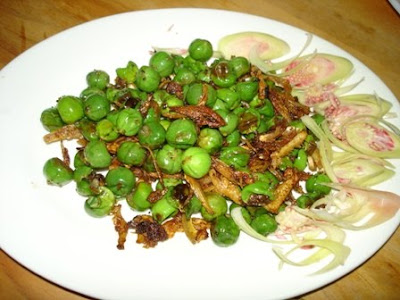
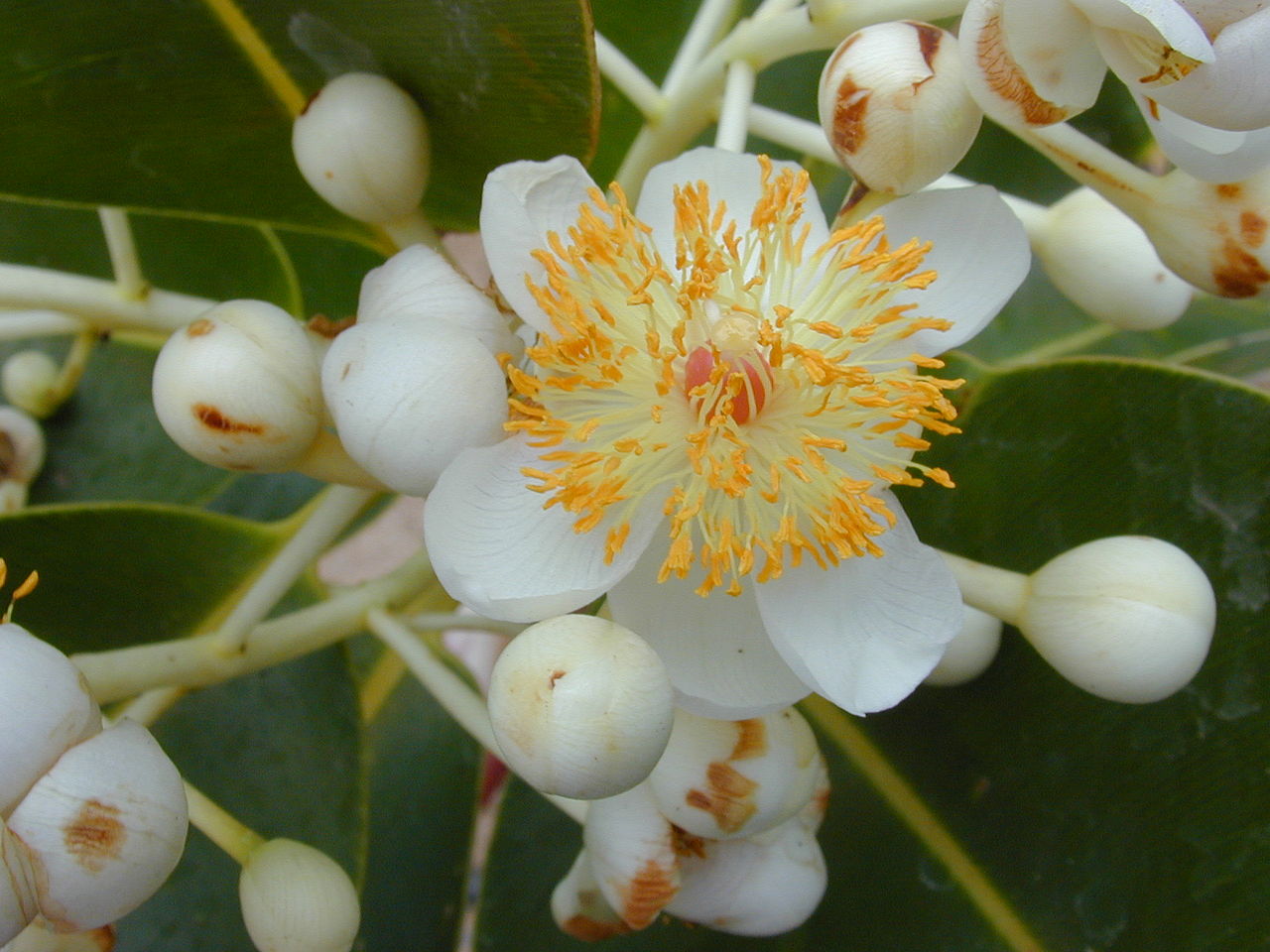
The Flowers of Cangkok Manis


Since migrating to Sarawak, the Foochows have learned to love this green vegetable called Cangkok Manis. The native Ibans also have their own name for this vegetable, while the western world knows it as a kind of gooseberry, the star gooseberry. It is also known as cekor manis, katuk and sweet leaf.

My grandfather having arrived in 1901 with Wong Nai Siong and his fellow Foochows observed some Ibans cooking in Sg. Merah and they noticed their vegetables. So before their own seeds brought from Fujian (Minqing and Kutient) were able to grow forth from their newly tilled soils, they went to forage jungle vegetables, incluing midin, paku, and bamboo shoots. 

When they learned about the cangkok manis, at first they called the vegetable Native Vegetable or Lakian Cai. The name has stuck for more than a hundred years. Now many feel that it is not politically correct and it a racist and derogatory name, so they have changed the name to Sayur Manis or Cangkok Manis.

Sarawakians of all races love this vegetable and it can be cooked with bamboo shoots, eggs and anchovies. It can be a soup, and I have made quiches with it. It is a very versatile vegetable. 

At one time, many claim that it contains a certain amount of cyanide but I have not reference to any scientific studies at hand. Many thus dont even want to touch it with a ten foot pole. But nevertheless it is now a favourite restaurant dish, after 100 years of Foochow settlement in Sibu.

But it is really a sweet vegetable, as the name Sayur Manis, suggests.

Its flowers are exquisite.

July 8, 2020

Wild Passon Fruit - Dragon Pearl Fruit


When we were young, we would love to pick this fruit to eat, especially when we were walking home from school. Most of my friends were not shy eating them and in those days we had not heard about pollution and no one used weedicides and pesticides on the footpath we used to go to school.

Our school gardeners used either the scythe or the old mowing machine. These wild passion fruit vines crawled all over the place if they were not cut by any human beings.

These dragon pearl fruits are actually wild passion fruits. Perhaps it is full of vitamin C like the huge passion fruits which are now cultivated in farms.
Sarawakiana@2: Sarawakian Local Delights : Exotic Wild Passion ...
The tamu sells the leaves which make a good stir fry. The young dragon pearl fruit also makes a good vegetable dish.

Passion fruits are now cultivated by the Foochows and other groups of people in Sibu and Miri. they fetch a very good price. Many use fresh fruits to decorate their cakes. Today I find the fresh fruits very sour and not to my liking. And if I make fresh drinks from the fruits I have to add some honey.

while the rich buy the expensive passion fruits which might come from overseas, I am happy to eat the leaves and the green fruits of the wild passion fruits.

And if I find a ripen golden Pok Pok Jee I will definitely pop it into my mouth like in the olden days.

Cheers.

June 12, 2020

White weed or Ageratum conyzoides


藿香薊.Family: AsteraceaeAgeratum conyzoides 1.jpg

This is a common weed found in Miri. According to most herbalists, it is an anti inflammatory, anti bacvterial , antifungal and styptic.

On Sundays in the market you can find an old man (Miri) selling his dried herbs and weeds. He would advise you to boil the dried leaves to help you release the pains of kidney stones.

However, most people recognise that boling the leaves as a tea to treat sore throat. 

Boil the roots as an infusion for reducing high temperature.白花胜红蓟(第1页) - 一起扣扣网

In Suriname, the leaves are also boiled and the tea will relief body itches.

P/S

Ageratum conyzoides is used medicinally in China to treat a variety of conditions, including common colds, headaches, boils, eczema, bleeding wounds, and burns.

中文名(Chinese Name):藿香蓟
学名(Scientific Name):Ageratum conyzoides L.
英文名(English Common Name): tropical whiteweed
别名(Chinese Common Name):胜红蓟

December 24, 2019

Meranti


Image may contain: outdoor


My children and I had lots of fun travelling along the roads of Sarawak. And quite often we would be trailing behind a truck with a huge meranti long and some other smaller logs. It is easy to identify a meranti log because it has a hole in the centre.

My children would say, "Look that's God's pencil in the front." They would imagine God placing some lead in the meranti log and start writing using his meranti pencil. What imagination!!


the cause of this hollow in the centre? "But large sized logs of dark red meranti (both seraya and nemesu) tend to rot away at the centre leaving a hollow core with active termite attack on the fringes." (Mohd. Alwy, 1961)

there are actually many different species of meranti in Sarawak. Hopefully our forests will regenerate in the years to come.

December 17, 2019

Mani Cai or Cangkok Manis


"Sauropus androgynus, also known as katukstar gooseberry, or sweet leaf, is a shrub grown in some tropical regions as a leaf vegetable. In Chinese it is called mani cai (马尼菜); in Japan it is called amame shiba (アマメシバ); in Malay it is called cekur manissayur manisasin-asin or cangkok manis (in Bruneian malay);[4][5] in Thai it is called pak waan (or pak waan ban to distinguish it from Melientha suavis, a completely different plant); in Vietnamese, it is called rau ngót; in the Philippines, it is called Chinese Malunggay and in Kerala, India it is called madhura cheera. "(Wikipedia)


Image may contain: plant, flower, nature and outdoor

While most people enjoy the stir fried young leaves of the mani cai or cangkok manis at home or in restaurants, many would not know that there are actually two basic types of this vegetable - there is the big leaf type and there is the small leaf type.
No photo description available.
Young seeds of cangkok manis

The original cangkok manis was found being eaten by the Ibans when the Foochows first came to Sibu. Soon after having some exchanges in the growing of vegetables and other food crops, the foochows started to grow the vegetables around their new homes.

There are some interesting recipes made from this vegetable:
a) Mee Hoon Cangkok Manis
b) Cangkok Manis soup with egg
c) Cangkok Manis stir fried with egg
d) Cangkok Manis cooked with Pumpkin
e) cangkok Manis with dried fish.
f) cangkok manis with sweet potatoes in coconut milk.
g) In West Malaysia, Pan Mee is served with cangkok manis.

No photo description available.

Today a young agronomist from Sibu (a Foochow) has successfuly grown cangkok manis on a commercial basis in Fujian. So after more than 100 years, the Foochows have brought back this green vegetable, a native of Sarawak, to grow in China.

The Cangkok Manis has helped Sibu Foochows to stave off starvation in the early 1900 and then later after the Second World War it became a restaurant vegetable. The status of a wild plant can be raised by social acceptance, so to speak. in the 21st Century it established itself in China.

Cangkok Manis in Minqing, Fujian, green house

This should be written into social geography books - how a very interesting, edible plant has travelled out of an island in South East Asia to the Asian Mainland.

November 25, 2019

A Pitcher Plant named after James Brooke

Image may contain: plant, nature and outdoor

This is one of the largest pitcher plants in the world and is rightly named the Rajah of Pitcher Plants. Perhaps not many people realize that this Nepenthes rajah , a pitcher plant from Borneo is named after James Brooke, the first White Rajah of Sarawak.

It is a lovely pitcher plant indeed and has appeared on a stamp of Malaysia in 1996.No photo description available.

The largest recorded pitcher of N. rajah, measuring 41 cm, was found on March 26, 2011, during a trip to Mesilau organised by The Sabah Society


Seven of the 90 recognised nepenthes species are only found in Sarawak. 

November 23, 2019

Named after Brooke

Rhododendron brokei, Rhododendron, named by Hugh Low 


Image may contain: flower, plant, nature and outdoor


Sir Hugh LowHugh Low.png


It had been named by Sir Hugh Low in honor of his friend Sir James Brooke, the first white rajah of Sarawak. "Perhaps the most gorgeous of the native plants are the various species of the genus Rhododendron ," Low says elsewhere (3), then goes on to rate R. brookeanum the most beautiful of all.


Other plants named in honour of James Brooke - 

November 22, 2019

Zingiber

Tepus is a wild ginger shoot that can be cooked to make a delightful dish in Sarawak. The shoots are often available in the weekend tamu. Its flowers are lovely to look at but it they are often missed because they grow at ground level. The shoots have a pretty pink skin which must be peeled off to get to the tender hearts of the shoots. A lovely stir fry with ikan bilis or kasam ikan.
Image may contain: plant, flower, nature and outdoor
Etlingera hemisphaerica is a herbaceous perennial plant producing a clump of erect stems about 2.5 metres tall from nderground rhizomes. The flowers are produced on separate, shorter stems growing directly from the rhizomes. The plant is harvested from the wild for local use as a food. It has been recommended as a source of material for making paper. It is often grown as an ornamental.

Etlingera littoralis (J.König) Giseke. Zingiberaceae. CN: [Malay - Tepus (generic and used for most wild gingers)]. Native to China (Hainan), Thailand, Malesia (Indonesia - Java, Kalimantan, Sumatra; Malaysia). Common in damp lowland forests throughout Peninsular Malaysia. Flowers with narrow lips and completely bounded by a yellow margin; emerge through the ground a little away from the leafy shoots. The decoction of the rhizomes has been used for the treatment of stomachache, carminative and heart tonic. Young unopened shoots eaten raw or blanched. Stem used to hasten ripening of fruits. *Wikipedia

November 5, 2019

Wild Torch Ginger of Sarawak

Image may contain: plant, flower, nature and outdoor

the wild torch ginger of Sarawak is one of the most beautiful flowers in the world. It is an edible flower.

It is used in the preparation of the Penang Assam Laksa, Thai style midin salad and many other Malaysian salads.

Added to soups, the torch ginger creates special flavours uniquely Sarawak.
No photo description available.
The Ibans love to eat the ripe seed pods as they are very sour and go well with rice. Added to a chilli sauce with lime juice, the seed pods create a great dip especially for pork satay.


Image may contain: plant, flower, outdoor and nature

October 17, 2019

Engkabang or Illipenut

It is said that there are 7 species of engkabang or illipenut, one of the most famous exports of Sarawak during the Colonial Days, before Malaysia was formed.

The Ibans have named them thus: engkabang jantung (Shorea macrophylla), engkabang bintang (Shorea splendida), engkabang gading (Shorea helmsleyana), engkabang terendak (Shorea simins), engkabang asu (Shorea palembanica), engkabang rusa (Shorea stenoptera) and engkabang langai bukit (Shorea pinanga).

To make oil from these winged fruits, follow these steps:

No photo description available.


1. take off the skin from the fruits and dry for at least 48 hours.
Image may contain: food

2. Crack the nut and take out the kernel.


3. Boil the kernels until they are soft.
4. Press or pound (using a wooden pestle and mortar)
5. Pour the oil into bamboo stems and let it solidify.


Image may contain: food and indoor

No photo description available.

This tree butter is excellent with hot rice. Enjoy!!

October 13, 2019

Japanese Sago Palm (cycas revoluta)


These attractive, low growing plants are not palm trees but cycades, a group of ancient tropical and sub tropical plants.
Very often they are grown as houseplants.Image may contain: plant and outdoor
they are so growing that it grows probably at 2 feet in five or six years.
Good for any one interested in having a good collection of houseplants, indoors or outdoors.

Interesting this palm, found in Southern Japan (Kyushu Island) produces sago.

October 6, 2019

How to make Rose Water

Thinking about making your own Rose Water?
Image may contain: flower, plant, outdoor and nature

Here is a simple recipe. Homemade rose water can be used as a natural skine toner, or mixed with glycerine to create a soothing and healing moisturizer.

It can be used as an ingredient in homemade soaps, lotions and skin care products.

You will need the following
Rose petals (1 cup)
Heat resistant glass bowl with lid (e.g. pyrex )
Rain water
Cheesecloth
Wide mouthed glass jar.

1. Boil 2 cups of water and pour the hot water over the rose petals.
2. Cover the bowl with a lid and let the rose petals steep for 30 minutes.
3. Cover the wide mouthed jar with a piece of cheesecloth and pour the rose water into the jar.
4. Discard the rose petals.

(Recipe copied from Google)

October 4, 2019

Bunga Pukul Lapan

Image may contain: flower, plant, nature and outdoor

this is a very interesting yellow flower found in Malaysia. The Malays call it Bunga Pukul Lapan. People can tell time with its opening at about 8 every morning.


Scientific name: Turnera subulata

Common name: White Alder, Sulphur Alder, Politician's flower, White Butter Cup, Dark Eyed Turnera
Malay name:
Bunga Lidah kuching (cat's tongue), Bunga Kembang Pukul Lapan, Bunga Delapan (8 O'clock flower)

Family: Turneraceae (Yellow Alder family)

Origin: Tropical American (Mexico, Jamaica, Brazil)
Category: Ever-flowering perennial herb

October 2, 2019

Bamboo Shoots of Sarawak

Image may contain: food
There are many kinds of bamboo shoots in Sarawak.
Image may contain: foodThe best is called Betong which is sweet and big in size. The Foochows first planted this bamboo to delineate their land from their neighbours. The bamboo was planted on the raised bunds after the pioneers had dug their trenches.Image may contain: food


Image may contain: shoes and food

Thus in my maternal grandparents' village, In just a few years after 1902, their bamboos started to give bamboo shoots for food and the bamboos were cut for building materials. Fences were often made from bamboo. And chairs and baskets were also made from bamboo.

But bamboo shoots became such an important source of food for every one.

September 29, 2019

The Sacred Tapang Tree

Image may contain: tree, sky, plant, outdoor and nature

This tapang tree, full of honeycombs is found along the road to Bakun. I had the pleasure of photographing it from a distance.

When Ibans see a huge tapang tree, they thank God for the awesome blessings with come with the tree - natural honey.

When a longhouse community has a few tapang trees they feel rich because when it is deemed timely, they will all go as a team to harvest the honey. It is almost ritual like for the community to do the harvesting.

First, a bon fire would be lit below the tapang tree which is full of honey combs. The people have to chase away the honey bees. Each of the honeycomb may be as long as 6 feet!!

Once the honey bees fly away, the best climbers will approach the honeycombs, usually with a torch which is full of ambers and smoke. This is also to protect himself against any stray been.

Once the climber or climbers reach the honey comb, they will slowly lower the comb to those waiting at the base of the tree. It may take the harvesters a whole day to separate the honey from the comb.

The result is a great harvest of pure honey which money often cannot buy. It is too dangerous to harvest honey bee in the jungle.

Tapang trees are sacred to the Ibans and they cannot be cut by adat.

A Chinese man had died suddenly and the hospital could not find any cause of his death. However later his co workers in the timber camp had mentioned that he was involved in cutting down a tapang tree using his bull dozer. He had not listened to the advice of the Ibans.

It is up to you to believe this.

But the tapang trees need to be convserved for future generations as they are the natural habitats of the best honey bees in the world.

September 4, 2019

Home Remedies : Nenas Kerang

Image may contain: plant, outdoor and nature

Oyster plant or boat lily, (Rhoeo discolor (L.Her.) or Nenans Kerang

  • preferred scientific name  is Tradescantia spathacea Sw., 1788
can be found in many backyards.

It has been used to make a cooling drink fo rhot days for centuries by the Chinese. It is usually boiled with candied winter melon (kundur). Kids love it. This cooling drink also helps with nourishing of the lungs and may help to stop coughing in some cases.

August 27, 2019

Bintangor Leaves and Flowers

Image result for kampong Bintangor


A Bintangor tree, a current main candidate for AIDS research. The tree lives in a region of Borneo that is nearing eradication from the logging and oil palm.


Starr 010309-0546 Calophyllum inophyllum.jpg

Leaves,flowers, and Bintangor tree. Photos from Google.

It has been reported that clinical trials using the improved Calanolide A compound derived from the Baintangor tree (Calophyllum lanigerum var austrocoriaceum) in the treatment of HIV have been very positive.

Many Sarawakians, including ministers of the government are excited about the research findings. Perhaps, state funds may be forth coming for more research. This could be good news for the whole world.

Many citizens hope that Sarawak would spearhead research into possible cures for HIV and other diseases. Bio-medical research in Sarawak is still in its infancy but if this research is successful, Sarawak will definitely become world renown.

June 30, 2019

Local Coriander in Sarawak

Yong Sui or Coriander Coriandrum sativum) is not easy to plant in Sarawak.
It is also known as Chinese parsley . It is known as cilantro in the western world.Image may contain: plant and food

The seeds are very important in Asian curry paste preparation and can be purchased in need little packets or boxes. They are light and very fragrant when dried and pounded.

The leaves are also awesome as garnish especially for Laksa Sarawak. Some gourmets claim that Laksa Sarawak without a sprig of coriander is not the authentic thing. The leaves may not be readily available in the market every day.
No photo description available.
Its leaves are pretty. 

June 7, 2019

Ridan

Ridan

There are many varieties of the same species in the SArawak jungles. Most of the fruits are are sour.

I was told that rukam is another similar fruit and is eaten with salt. It is a bit like longan.

Most fruits of the rattan family have  no regular season. So foragers in the ulu will be able to pick up some as and when they like, or when they stumble on them. Usually the hardworking foragers can pick up quite a bit of fruits when they are determined to make a few extra ringgit in the weekends.

But on the other hand, many Ibans just igrnore them because they know how it is important for the fruits to ripe and then dispersed.... ...for regeneration of more rattan.

All types of rattans in Sarawak are facingImage result for Salacca affinis Griff. extinction.Image result for Salacca affinis Griff.

The stems of the ridan palm leaves are very useful. They can be made into fish traps (bubu) and fishing rods too.

(The photo of the ridan fruit is taken from an article I wrote for Sundaypost, Jan 13, 2019)
Other photos are from Google.


June 6, 2019

Red Star Flowers in the Secondary Jungle

Recently I took some photos of creepers with red flowers and I started to remember my child hood days, playing make belief skits.

We used to see lots of these these tiny red trumpet like flowers  with five points growing around our kampong and village during our younger days.

We girls would pull them up and wear them on our heads pretending to be brides and bridesmaids. We must have been like 6 years old. They have small size leaves, similar to fish bones. Very gentle on our hands and heads!! So we were able to create hair bands for our heads. We looked so pretty. Like fairies.

I was able to learn its scientific names later by looking at books in the library. It is called Ipomoea quamoclit (Cyrpress Vine)


How strange for us, TODAY, as we have grown old to be grandmothers and we thought that we were wrong to be embarrassed and we should not have allowed relatives to feed us with wrong information. Young men and young women should have healthy communication and have face to face encounters.

So many of my friends had secret rendevous with some unknown men and and so many of them ended up having bad relationships or they got married and then divorced.

Those having better open relationships and those having relationships with men approved by their families, studied well, went further afield. They either had good families or remained single.

Did playing childhood games prepare us for better relationships in our adult lives?

Tell me.


Ferry - Labuan - Limbang - Lawas

  In 1974 I started my teaching career in SMK Limbang. I had completed my degree and diploma of education in 1973. When I asked for a postin...