My friend Wong Meng Lei is famous for Chinese New Year Couplets.
In the olden days, just before Chinese New Year, many older Chinese , including a famous artist, Lau Mang, would go around visiting the towkays, to wish them a happy Chinese New Year. The towkays would hand out a red note or ten dollars or sometimes even more. Some old ladies also join the Chinese New Year couplet business. They would get their grand children to write the auspicious words and then they would go from shop to shop to say their greetings. They often receive less like a few ringgit. But it was a good way of getting some cash.
I would always count the number of those red paper in my uncles' shops. Those whowere very generous would have more than 20 on their walls.
The Methodist Message Chief Operating Officer Wong Meng Lei wrote many couplets, and had them printed. The couplets were enclosed in the Wei Li Bao, the Chinese Methodist Message and every read would receive one. Those who want freshly written ones would visit Meng Lei...
This year is his last year with Wei Li Bao., And we really thank him for making WeiLiBao world famous. He has done a very good job. Brilliant!!
My late father would always get up early to welcome the first day of the Lunar New Year by lighting a long set of fire crackers which he would hang from a window of the first floor of our house.
Usually all the neighbours would be up to do the same thing. And the time would be just after a few cock crows, roughly about 5 or 5.30 a.m.
(The remains of the 20 or 30 foot fire crackers are left on the road - colouring the landscape for days, or until a heavy rain washes it away. We Chinese will not sweep the auspicious remnants of the fire crackers away...._
The whole neighbourhood would be up and the excited sounds of preparing for the Lunar New Year could be heard. It was such heart warming sounds of activities. Mum would slaughter a duck and a chicken as usual but we kids would run away from the sight.
Truth be told, I was able to help with the slaughtering of chickens or ducks until I was about 18 and after that age I was never to slit the neck of a bird, big or small. I could not stand the sight of blood and for that reason I could never think of becoming a nurse or a doctor. I did faint once when I help to dress the wound of a school mate. She did not faint, but I fainted to the amusement of the teachers.
The red mess left by the fire crackers would colour the pavements for days.
My cousin Tiong Nei Hung owns the Ing Kong Drug store, which is one of the biggest Chinese sin seh and medical stores in Miri. My cousin is not a trained sin seh but he is very knowlegeable about what herbs to use for certain ailments.
One of his favourite chores in the shop is to roll Foochow thread like noodles into a small ball to dry in the sun. He does this in his shop almost every day.
He gets his mee sua supply from Sarikei and many people like to buy from him.
A small ball of freshly made Foochow noodles, rolled up and ready to be sun dried. These balls can keep well in an air tight tin for even up to one year!!
Mee sua is a very important noodle for the Foochows. It is for celebration of a festival, a birthday, confinement, or for any occasion. It is also a meal by itself, when served with chicken soup
However many housewives would prefer to dry the noodles themselves.
The Foochows in China used to welcome spring by making spring pancakes which are also called spring onion/scallion pancakes.
In the northern part of China, this spring onion pancakes would be the vegetarians' way of celebrating the arrival of Spring, without a Peking Duck.
It is really easy to make the onion pancakes and there is no standard recipe for its making.
This pancake is savoury and is a good way for families to gather together to celebrate without a big budget.
Another kind of Spring Pancake the Foochows make is the Spring Roll. Yes, exactly what the name suggest.
It is a thin pancake with lots of fillings which mayh be minced pork, onions, chives, long beans, prawns and crushed peanuts. Spring rolls have become a common snack or street food people eat every day, not just in Spring.
In the olden days, when our elders longed to go back to China, preparing food like onion pancakes or spring rolls helped make them feel better. They would not be so homesick for Tong Sang. In fact when they saw their offsrpings and even grand children enjoying traditional food from China, they felt comforted.
I still remember my grandmother checking her old style Chinese calendar which will tell her when Spring would arrive. And she would mumble to herself, Spring would arrive soon, perhaps we have to make spring rolls for a change.
And true enough at the corner of High Street in Sibu, the Hokkien man would be making the spring roll skin...my mum would buy some and off we would go home to cook the fillings and enjoy our spring roll.
I would remind my grandmother that in Sarawak, every day seemed to be like spring , or summer, or autumn...but we never had winter. And she would nod her head and sigh. She would then whisper, when a season came and went, we would feel that time had passed by and we would be more prepared for the future. But here in Sarawak, every day seemed to be the same,so we would not be that well prepared.
In China, today, welcoming Spring need not be elaborate in most farming areas.
Prince Albert, Queen Victoria’s consort, is usually credited
with having introduced the Christmas tree into England in 1840. However,
the honour of establishing this tradition in the United Kingdom
rightfully belongs to ‘good Queen Charlotte’, the German wife of George
III, who set up the first known English tree at Queen’s Lodge, Windsor,
in December, 1800.
Legend has it that Queen Charlotte’s
compatriot, Martin Luther, loved Christmas.
Many believed that he invented the
Christmas tree. One winter’s night in 1536, so the story goes, Luther
was walking through a pine forest near his home in Wittenberg when he
suddenly looked up and saw thousands of stars glinting jewel-like among
the branches of the trees. This wondrous sight inspired him to set up a
candle-lit fir tree in his house that Christmas to remind his children
of the starry heavens from whence their Saviour came.
The poet Samuel Taylor
Coleridge (1772-1834) visited Mecklenburg-Strelitz in December, 1798,
and was much struck by the yew-branch ceremony that he witnessed there,
the following account of which he wrote in a letter to his wife dated
April 23rd, 1799: ‘On the evening before Christmas Day, one of the
parlours is lighted up by the children, into which the parents must not
go; a great yew bough is fastened on the table at a little distance from
the wall, a multitude of little tapers are fixed in the bough ... and
coloured paper etc. hangs and flutters from the twigs. Under this bough
the children lay out the presents they mean for their parents, still
concealing in their pockets what they intend for each other. Then the
parents are introduced, and each presents his little gift; they then
bring out the remainder one by one from their pockets, and present them
with kisses and embraces’.
(Photo from the Star)
Sibu, a very Methodist Town in Sarawak, has beautiful Christmas trees display every year.
James Hoover must have loved Christmas trees too when he was in Sibu for more than 30 years.
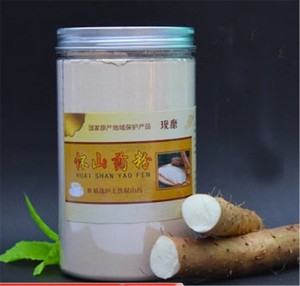
It produces tubers which can measure up to 1 m long and weight up to 2.5 kg.
Available in supermarkets
The Chinese believe in its medicinal benefits. It is used to treat poor appetite, chronic diarrhea, asthma, dry coughts, fequent urination and diabetes.
Fresh Shan Yao can be eaten raw, baked, boiled, fried, mashed and in soup. It is also available in liquid, capsules, dried root, extract or tea, from Chinese medicine shops.
A favourite way of cooking shan yao is to boil some chicken with the several slices of the tuber, goji berries and red dates, ginger. It is a nourishing soup. If you cannot get fresh shan yao tubers, you can buy the dried ones from Chinese medicine shops.
Paul Ling kindly showed me a Chinese Sale and Purchase document of the Rajah Period of Sarawak. It is an amazing document reflecting the proper code of conduct of the Foochows in the 1920's and 1930's (The Republic of China 19th Year ). Legal work was mainly done by the educated people together with the headmen of the various areas who were given jurisdiction by the Rajah and the government to carry out civil matters.
This is a fantastic story of a Sale and Purchase of a one month year old boy. It would be impossible today to think of making arrangements like this in a lawyer's office or even a Temenggong's office.
The signatories were :
Father of the boy child : Ngu Heng Hwang
Mother : Ngu Yek Lien Choon
Broker : Kong Siew Choon
Officiating Person : (Chinese Headman) Tiong Kung Ping
Witness and Documentor : Yao Siew King
on 17th May 19th Year of the Republic of China (1930) .
My grandfather is on the extreme right. Ling Ming Lok and Ling Ching Tu are the other two.
Note the signatures of Rev Yao Siew King and my grandfather's. Most women in those days could not read and write. So they used their thumbprints.
The Chinese characters tell the tale of Ling Ming Lok buying a MALE child from the Ngu family who were in dire straits. The sale price is 110 ( silver) dollars, which is a token for the Ngu family, to compensate them for the bearing of the child and the confinement for the natural or birth mother. The agreement also states that the Ling family would see to the upbringing of the boy who is already out of his first month i.e. full moon.
Ngu was a labourer and his wife was a farmer.
This is a long piece of paper on which a Sale and Purchase Agreement is written and the Chinese brush is still in excellent condition. The red paper (happy event using red paper) is now very friable. The writing was of Chinese brush and Chinese ink with the excellent and famous penmanship of Rev. Yao Siew King.
The photo shows Paul Ling, the grandson of the Purchaser , Ling Ming Lok, who has kept this for about 40 years. This is an 83 years old document. His Grandmother passed the document to him for keeping.
The document is very properly written and is legally binding. It also shows that our beloved Rev Yao Siew King was a very learned man.
The four characters "gua die mian chang" can be taken to mean (gua and die mean small cucumber, mian chang mean endless long) "wishing the couple have a lot of
grandchildren and a prosperous generation" Very good wishes from Rev Yao and Ling Ming Lok.
(Thank you Ling Huong Yian for the translation)
And indeed the Ling family of Bintangor prospered.
It is good that historical documents are kept by family members for safe keeping. A huge chunk of history can be retrieved from a primary source like this.
This photo is from my friend. The beautiful bride is his daughter.
Today in Sibu, cake cutting is part of the church wedding service or at the beginning of the wedding banquet in the restaurant.
when did the wedding cake become part of our Foochow tradition?
Who was the bride in Sibu who had the first ever wedding cake?
Who made the first wedding cakes in Sibu?
(Note : The modern wedding cake as we know it now would originate at the 1882 wedding of Prince Leopold, Duke of Albany; his wedding cake was the first to actually be completely edible.)
On my grandfather's 70th birthday, my "Singapore aunts" came back to Sibu and join forces with my other Sibu aunts and uncles to buy a large gold pendant (seen in the photo) for him to wear.
It was a grand occasion which included a service held in Sing Ang Church in Sungei Merah, followed by a family dinner in his house on the top of the hill.
Gold gifts are so preciously regarded. They are given to baby boys (some baby girls) at their birth, girls when they got married, and the big birthdays of 60, 70, 80 etc.
But as a Foochow woman comes to the end of her life, she would prepare what the Foochows call, "End of hand" or chiu mui. She will distribute little pieces of gold or siler to her dearest relatives and especially sisters as a farewell and thank you gift.
My ngie mah (maternal grandmother) reserved one gold bracelet worth more than RM5,000 at today's value, for her third daughter in law, because she had promised her the gift. My third aunt was the one who cared for my grandmother until the end of her life. My grandmother, sadly was visually handicapped in the last 10 years of her life. That was a very sad period of our lives.
The Foochows value gold like most Asians. They would prefer to buy 24 karat gold rather than any other types.
I did not want to write this article earlier in case it rubs my readers the wrong way.
Do some of your older relatives "call their dearly departed" home for the New Year and Chap Goh Mei reunion dinner? A few of my aunts and cousins do this while some of them are Christians some are not. Some have learnt this ritual from their own mothers in China as one of my cousins told me. She had witnessed how her own mother cried such such "reunions" in China.But not all Foochows practise this today.
Here is a description of my aunt's Chap Goh Mei Reunion dinner with her "dearly departed"
this is an ancient Chinese painting. the empty seats are for those friends
who have already gone from this life.
When the food was all ready my aunt invited her "guests" by opening her main door and calling them to come into the living room. After a short while when she had seen that her table was all ready she went to the photos (usually we Foochows hang photos of our dearly departed on the "main wall" by calling them individually asking them to take their seats at the table....
And then she sat down at the table and started talking to them one after another in the family's hierarchical order. She reported whatever had been happening throughout the year. It was like a counselling session with the elders paying attention to her. ( Occasionally in the past when there were other living relatives within ear shot she might even speak louder for both sets of people to hear ..I know my aunt sometimes cries very loudly but most of the time she is serene and collected.)
Reminding them of what the younger generation has been doing my aunt was like submitting a report card for each of her children to the grandparents and dearly departed father!! Others might interpret this differently. It could be her way of doing reverse psychology.
Again more often than not her own married children would not be with her when she carried out this ritual as they would be doing their "living reunion" with their own children. I guess when a mother lives alone and she does not want to spend her new year with her children she must have a good plan to fall back on. And this aunt of mine chooses this ritual for herself for reasons best known to her.
Another way of "reuniting with the dearly departed" was how an elderly cousin of mine stood before the photo of her dearly departed husband and with tears in her eyes she recounted her own stories for example about the 13 months her husband was in the New Village "prison" in Kuching because her late husband was suspected of taking part in Communist activities or was a Communist sympathiser.
She went on to remind him how she raised their children while he was away for 13 months and how she tilled the land and saved money to visit him in Kuching...and then she told him how she suffered when he was dying from liver cancer.
This monologue before the photo took about half an hour and I witnessed it only once when I was her other guest at her special chap goh mei dinner. In fact I found it quite hard to eat the dinner with her after her special reunion. There were only two of us as she is a vegetarian and I happened to be free to be with her.
I am sure deep in my aunt's heart she still misses her late husband especially. And as for my cousin there is no doubt even up to now she still loves her late husband very very much. She came all the way from China to marry him without even knowing him in 1950. She was a child bride of those long ago days. And she had really helped him through thick and thin and now with all the wealth that she had accumulated she is spending them on her children and grandchildren. Indeed to my knowledge she was the one who did all the farming and hardwork to buy land and property.
These are two rituals which several of my Foochow elders continue to take part...I wonder if there are other rituals left in this modern world?
As many of my readers would know Foochow girls of my age were not be married off in the traditional manner (with fire crackers and big lanterns) as those were post Communist insurgency day in Sarawak and times were rather hard in the early 70's. No dowry( 送嫁妆) carried on bamboo poles paraded ahead of my bridal car . No Foochow brass band announced our wedding either!!
Because my wedding was a simple Church affair without the presence of a living father my mother wanted the occasion to be simple without pomp and splendour. I therefore did not even receive a set of wedding tea cups. Did I really want a set? I cannot remember if I did ask for one...and I think my mum did not even suggest anything at all....Keep it simple were her words and those words were echoed by all my relatives. Foochows are after all very practical and pragmatic people. No frills at all. If there were wedding planners in those days they would be paralysed by this attitude!!
So perhaps after 37 years (as a replacement ) I am writing about them here in this posting. Do take all these with a big pinch of humour.
According to the traditional Chinese practices the Chinese dowry may be delivered with the return gifts on the day of betrothal or delivered a few days before the wedding. Many families continue to practise this in certain places around the world.
So this gives the impression that Chinese weddings are expensive affair for the groom's parents since they have to pay for the betrothal gifts, bride price and wedding banquet. Most non Foochow men dare not even think of marrying Foochow girls because of the bride price to start with. But today the trend is slowly changing for the better.
However,today as it was in the past, it may not be so, as the bride's parents also have a long long list of items to prepare for the bride's dowry and may also co-pay for the wedding banquet. (According to Foochow customs it is the bridegroom who has to foot the engagement party costs - which thus becomes part of the dowry and it may be the only event he has to pay for if nothing else is asked).
According to the Chinese wedding planner I have met recently ( it is possible and within the wedding budget) the dowry typically include personal items for the bride and household or electrical appliances for the couple's new home, such as
tea set,
beddings,
bedroom furniture and bathroom items,
set of washbasins and buckets/double happiness spitoon called "子孙桶",(very optional now but still available in many outlets in Miri)
electrical household appliances,
clothing,
gold jewellery,
even bicycle
etc.
These are my photos of some selected tea sets ...There are more in the two Chinese Wedding gift shops in Miri.
A tea set for the wedding tea ceremony must be included. Traditionally after the wedding, the tea set is kept and used once again when the bride's and groom's daughter serve her parents tea when she gets married.
It is a chinese tradition for daughter-in-law to greet her parents-in-law with tea (敬茶)every morning. However, in modern society, such traditions are no longer followed although I heard some families still want to practise this.
The bride will only serve her parents-in-law tea during the wedding ceremony and perhaps during certain festive events, such as the in-law's birthdays and chinese new year.
Here's a pink set which is fairly traditional in shape and design. According to the elderly lady who knows about these tea sets - whether four or five cups is not important. There are some tea sets with six cups even. It is actually with four cups according to her. But a small tray to complete the set is a must. We must try to look for the Japanese manufactured ones.
This lovely tea set is from Japan. Very trendy in the 80's.
So I am wondering if many of my readers who are Chinese still keep their wedding tea set?????????? I did mention to my friend that I might go and buy a set for myself - and put them on display (smile)...Two of my daughters have been married off and I did not give them tea sets as dowry....so may be they are smiling when they read this...This is just after all some knowledge shared about our traditions from China.
Modern day drinking in Fujian calls for some clever rituals and speech making. Most adults have the language to propose a toast.
We from Nanyang have a lot to learn from them.
Our Mr. Deng Wang Chew was good at saying all the great phrases, wishing every one good health for example.
Mr. Tiong Yong Ching is also good.
So when one man starts standing up and his his glass, he would make a little speech and every one will stand up to thank him and bottoms up.
Yam seng. Gambei.
When someone remembers to say something, perhaps already intoxicated, he will stand up and raise his glass....gives a good toast, and every one will stand up and they will have a round of gambei.
Many people think that this ritual is to show that one is trustworthy and upright.
10 Chinese drinking rules (from Google)
Drink at least one glass of wine with at least every person at a table
Never refuse to participate in a toast, it is considered extremely rude
Unlike Europeans or Americans, in China it is not necessary to look someone in the eye while toasting
Elderly people and superiors should always be toasted first
干杯 ganbei in most cases still means “bottoms up”, if you don’t want to drink the whole cup just say suiyi随意, which means „as one pleases“
Do not toast before the boss or host.
There is no need for an elaborate toast before each drink, but when adressing someone for a toast you should say 敬你一杯 (jing ni yi bei); a repectful way of offering a toast
If someone proposes a toast and stands up, you should stand up as well. If you toast with a superior you should also stand up to show respect (in many cases they will make you sit down again)
The one who proposes a toast must drink more than the person toasted
When proposing a toast, one should raise the glass below the glass of the person toasted, unless one is the host or boss.
Traditional way of making foochow Red Wine -= store in jars, which are called TANG. My grandmother used to say that when she was young in Keh Tou Puoh, people used to buy a whole JAR or TANG of red wine for confinement.
People are searching high and low for the Kompia recipe. Please don't try this if you think it may fail. I have not tried it myself though. May be one day.
(食譜參考紐西蘭美女的家)
材料:
中筋麵粉250克 Medium flour 250 gm
速發酵母4克 4 gm yeast
水120克 water 120 gm
糖5克 Sugar 5 gm
鹽3克 salt 3 gm
蛋1顆 1 egg
白芝麻適量 Whit sesame seeds
牛奶適量 Some milk.
做法:
1.除了白芝麻和牛奶外所有材料揉成一光滑麵糰,放入已抹油之盆中,蓋上濕布發酵60分鐘.. Assemble all the ingredients except sesame seeds and milk in a greased bowl for an hour.
2.取出麵糰並壓出空氣,再擀成一公分厚麵皮,用6公分左右模型壓出圓片,約可做出11個. Knead to form 1 cm thick
dough, make 11 balls. Flatten the balls .
3.用筷子在圓型中間戳洞. Use a chopstick to make a hole in the middle of each kompia
4.刷子沾牛奶塗在麵糰上,再灑上適量白芝麻.. Use milk as a glaze. Spread some sesame seeds on each kompia.
5.放在有烘焙紙的烤盤上,蓋上濕布靜置鬆弛15分鐘. Bake for 15 mins until golden. 200 degrees Oven.
Besides getting a good dinner, we looked forward to probably a new set of clothes and a new pair of shoes. Those with big families might not enjoy so many new clothes or even pajamas. It was a custom to have new pajamas for the new year.
The town would be bursting with activities and shops would be selling extra stuff, be it food, clothes, or toys.
The cinemas, Lido, Rex, Cathay, and Palace, would put up lots of posters of the Chinese New Year movies.
And that was what I liked in particular. I might be able to see at least 4 good movies, one in each of the cinemas. These movies would the latest. After watching the movies we would critique what we saw for days after the New Year in our school.
I had then a school mate who watched a movie every night with her China born mother. Most mothers said watching movie was bad for our studies. But this girl was always top. We secretly thought that watching movies helped a person do better in their studies.
Until now I still love watching movies, not just during Chinese New Year. I definitely would like to watch a movie every night.
In 1901 which was almost the end of the Ching Dynasty Mr. Wong Nai Siong brought 1118 Foochows (in three batches) to settle in Sg. Ensurai and Sg. Seduan designated by the Rajah Brooke at that time. One of the pioneers was Lau Kah Tii who subsequently had several sons and daughters. One of the sons is Lau Pang Hung - who became a famous and dedicated teacher in Sibu and Sarikei. Pang Hung is my uncle (my mother's first cousin)
Pang Hung married Ting Ping Yii the daughter of one of the first Foochow Methodist Ministers who came later to Sibu. My aunt Ping Yii's sister is Wong Meng Lei's mother.
In the first photo below is also Ling Huong Yian who was my Sixth Form student in Methodist Secondary School of Sibu in 1985-86. Ever since her Sixth Form days she has been a very keen scholar of history. She is now researching on Foochow Pioneering Spirit for her PhD thesis (University of Malaya).
(From Left : Aunt Ping Yii - Ling Huong Yian - Uncle Pang Hung and Wong Meng Lei)
Huong Yian 's family also originated in the Sg. Ensurai (Ah Poh or Lower River Ensurai) area although she and her family are now based in Bintulu at the moment..
It is NORMAL for traditional and older Foochows to ask about each other's origins whenever they meet for the first time. My Uncle Pang Hung by his cultural upbringing for example would ask "Where was your father born?" or "Where did your mother live?" By asking these social questions our elders can make the "Foochow Connections". Even I do that often whenever I meet up with some nice young Foochows. However not all Foochows would communicate in this way. Because it would all depend on their upbringing. Some may be so distant that they do not ask any question at all upon being introduced.
Any way young Foochows should not be embarrassed when they are asked these questions. And please feel alright because it is the way most of the older generation behave. And I am not ill at ease at all if my Foochow elders ask where my grandparents come from ...or even where my mother came from. After getting the answers we will then learn how to address each other properly too. By answering these questions properly we are also showing great respect to our Foochow elders. I do understand that some people do not wish to reveal their origins but perhaps a carefully worded " I don't know or I am not so sure" could suffice with a nice smile too? The ability to communicate socially well and properly without being politically incorrect is still one of the most complicated skills so highly demanded by some global organisations that they spend millions each year to provide the right guru (e.g. Alan Pease).
Interestingly after some conversation with Foochow elders you might even find out that you are the grand aunty one of these days!!
And for that matter in the past it was this kind of FOOCHOW CONNECTION that many bright young Foochows were helped by their elders to succeed and become famous. This page is too small for me to mention all the successful Foochows who have been helped (led to the shore...keng shuorn ngiang) by their helpful relatives or friends. Basically in the Chinese culture according to Confucian teachings elders are expected to be "ren" and "jun tze" meaning kind and gentlemanly which will lead to a society that is proper (li) and without strife.
Wong Meng Lei as a Foochow who has great spirit to help others has been aiding a lot of scholars in their field studies and research. Any one who is interested in Sibu history can find some resources in the Methodist Message Office . Meng Lei is the Chief Administrative Officer (Kang Shu) of MM in Sibu.
As part of her research Huong Yian went to visit my uncle Pang Hung recently. She was presented with a book on Lau Kah Tii the man who was considered the second headman of Foochow Settlement after Wong Nai Siong left Sibu to continue his own work in China. This book is a compilation of the Lau Family's history and achievement from 1901 until now. It is one of the earliest "Family" books in Sibu.
When the Foochow pioneers came to Sibu actually not many of them could read and write. Hence the dirth of books in those days. But 110 years later more than 50 schools and churches have been established all over Sarawak and Sabah by the Methodist Church and the Foochows to benefit the second and third generations and subsequent descendants. My grand uncle Kah Tii for example established Su Lai Primary School in the 1940's. Recently the Su Lai Primary School was moved to Sibu.
Several books have been written about the lives and work of the Foochow Pionners and other leading community characters - thanks to writers like Wong Meng Lei in the new age and others. A lot of writings have also been left behind by Rev Ling Kai Cheng and Rev. Ling Wen Choon. Lau Tze Cheng has been recognised as a Sibu Foochow historian and he had written more than 10 books in his life time. Most of these works have been self financed. Fortunately today some Foundations have been set up in order to encourage more historical studies and writing efforts.Scholars from other countries have also written books about Sibu and the Foochow pioneers.
Hopefully this interest in social - economic history of Sibu will continue and an increasing number of books will be published not only about the Foochows but about the other races and dialects to give a more complete picture of the Rajang Valley in general and Sibu in particular.
We are looking forward to a book by the new generation scholar Ling Huong Yian!!
My late father had a special liking for Cantonese cuisine. He loved amongst others the Cantonese style suckling pig and roasted pig heads. Perhaps not many people know that traditional Foochows do not roast meat the way Cantonese do. My father however also loved to cook one special dish on occasions like birthdays and the various festivals - the soft and slowly boiled knuckle with ginger and wine (and a dash of soy sauce). This dish is called "Chin Niik/Pork" and is indeed a fantastic dish which my family loves since all those long ago days. The skin and the meat can become so tender during the slow cooking that a chopstick can slice the flesh!! Today's posting however is about the suckling pig ....and I do have Ann(a Cantonese) and her family in mind ...
A good side dish to go with the suckling pig is pounded and stir fried Tapioca leaves fried with some ikan bilis and ginger - Some cucumber pickles would also be a good accompaniment. Another side dish is brinjal tempura. So this meal we had with the suckling pig is actually quite a cultural fusion of cuisine!!
(My son pounded the tapioca leaves which I gathered early in the morning from the nearby border land. Tapioca grows wild in most places and indigenous food gatherers are often seen picking the tops in the morning in the ulu. I often get mine whenever I go for a walk in the nearby river banks.)
(My brother taking the warm and freshly cooked suckling pig into the house....the sight of the nice box makes us all smile with great expectations.)
A suckling pig (or sucking pig, according to the OED) is a piglet fed on its mother's milk and slaughtered between the ages of two and six weeks. Suckling pig is traditionally cooked whole, often roasted, in various cuisines. It is usually prepared for special occasions and gatherings.
The term derives from the word "suckling", which refers to a young mammal still being suckled.
The meat from suckling pig is pale and tender and the cooked skin is crisp and can be used for pork rinds. The texture of the meat can be somewhat gelatinous due to the amount of collagen in a young pig.
(The suckling pig we ordered as take away is already chopped up nicely - almost exact rectangle pieces ready for the chopsticks)
(The head cut into two and arranged nicely on the plastic platter.)
The suckling pig is also known in other cultures by other names.
Lechón is a pork dish in several regions of the world, most specifically Spain and its former colonial possessions throughout the world. The word lechón originated from the Spanish term leche (milk); thus lechón refers to a suckling pig that is roasted. Lechón is a popular cuisine in Spain, Cuba, Puerto Rico, Colombia, Costa Rica, the Dominican Republic, other Spanish-speaking nations in Latin America and considered as the National Dish of the Philippines. The dish features a whole roasted pig cooked over charcoal.
In most regions, lechón is prepared throughout the year for any special occasion, during festivals, and the holidays. After seasoning, the pig is cooked by skewering the entire animal, entrails removed, on a large stick and cooking it in a pit filled with charcoal. The pig is placed over the charcoal, and the stick or rod it is attached to is turned in a rotisserie action.
Balinese cooking has a type of suckling pig called Babi Guling.
Presenting a suckling pig to a welcomed guest is a good gesture but bringing home one to mother is an act of filial piety. The soft flesh is easily eaten when mum does not have enough good teeth to chew. And the crunchy and crispy skin melts in the mouth.
A well roasted suckling pig at Chinese any dinner is a cultural feather in the cap worn not only by a good chef but by the gracious host.
To my family eating a good suckling pig once a year is a joy in itself....and a celebration of life!!
A cousin's wife was back from Australia and I was interested in meeting up with Aunt Ling again to make Mi Turn Kui or Rice Layered Cake.
A 2-in-1 event became a great reunion of sorts and it coincided with Mid Autumn.
the Making of Mi Turn Kui was easy and my Ling Koo was so sporting...You will note that she walks with the help of a "friend".
Method : Take one packet of rice flour - Three Elephants Brand.
Meanwhile get the kuali steaming hot with the cake pan in it. Add one spoon of Soda (from Chinese Medicine shop or sundry shop) to the mixing bowl. Add a bit of salt and 2 cups of water until the batter is like a pan cake batter. Try a little in a little dish. Steam....and this is really good way of not spoiling the whole batter. If the consistency is good then you can start making the first layer of the Mi Turn Kui.
Mix well until no solids can be found. Colouring comes with a drop or two of light soy sauce. Some flavorings can come from a bit of Vitsin. (My version would include some cummin and fennel powder)
A simple kuali with a lid like this will do. Gas supply in Miri is great and economical all these years if you have it piped to the house. Most old houses in Miri have piped gas.
Use a Chinese bowl as a measuring cup for each layer. The pan must be oiled first with cooking oil.
We started making the kuih at 12 and each layer takes about 20 minutes and is firm to the touch. By two we had 9 layers made.....
The final product would have some wrinkles...like wrinkles on your forehead.
Ah Ling Koo is a very good teacher traditional Foochow Cuisine. My great grandfather and Ah Ling Koo's grandfather were brothers.
When Foochows serve Hong Ngang and Egg - it is a big deal!! or great honour. This is from Chong and Law a famous restaurant in Miri, it is really nice with lots of Foochow Red Wine.
Pork Leg Steamed or double boiled in Red Wine - a festive dish. (The Foochows usually say that it is so delicious you have to tie your tongue....)
This is the layer cake I gave a helping hand in making!! Hurray! After three generations of time passing by I can make it all by myself now. (WE normally fry the sliced cakes the next day for breakfast.)
The family together again...and thanks to Ah Ling Koo we can be together very often...Together again Foochow Style. The Moon is very Round here!!
Watch for another explorative culinary escapade of mine in the near future!!
Cheers...preserve our traditions but also be innovative...Hope Han Sen of Sibu is reading this...(or Mr. Bean)...