Showing posts with label Sibu Tales.. Show all posts

May 10, 2022

Sibu Tales : Prostitutes in Sibu,1960's

 Sibu Urban District Council (Sarawak Gazette, 31.7.1965) announced , "The Council is taking steps to eliminate prostitutes and waitresses from coffee shops to reduce troubles caused by them."

What are the better synonyms for the word PROSTITUTES?

This brings back my classroom story of a Form Six boy who wrote an essay entitled "My Mother" for Mother's Day.

He started by writing, "My mother is a hooker." As I marked his essay, I knew he was writing about his mother, a hawker.

I did not reprimand him but instead went on to teach many lessons on synonyms. I think till this day I am the only one who knows how he mispelt words in his writing. Lovely student who went on to do well in life.

The Confrontation period saw many coffee shops, hotels, and eateries doing good business. It also coincided with the timber boom of Sarawak which caused  Sibu to become a busy and bustling town then. Mercedes were imported and other big cars filled the road where once bicycles ruled. Sibu was a town where drivers feared to drive because of thousands of bicycles which zoomed in and out of small lanes, back lanes and major and small roads. Many cyclists were even brought to court for unruly cyling or causing hurt.

The Indonesian Confrontation also brought about a new era to the Rajang Valley. With an army camp sited in Sibu, Gurkhas and Australian soldiers, the town population saw a marked improvement in a lot of businesses. New businesses also appeared. Cold storages came to the once sleepy down, to the pleasant surprise and actually delight of many housewives!! I had my first taste of imported Magnolia Ice Cream in the first Ice Cream Shop in Sibu. 

Wives must be accompanied by their husbands when going out to town,etc. Policemen walked the streets in their khaki uniform (shorts and knee length socks!!), carrying batons which frightened little and very innocent , wide eyed children.

We children were told that we had to be careful because there were lots of MATA Gelap or Special Branch policemen around who would capture naughty children.

Many coffee shops, especially the larger, corner ones, were full of soldiers in their uniform, enjoying good food and their beers. They loved being entertained by the ladies of the night especially those who were able to speak English. A few coffee shops became really famous and prosperous because of the new business.

While the Chinese community was not overly perturbed by the "economic boom" in Sibu, the Councillors were sort of distressed but they had to be careful not to disturb the general situation in Sibu. Money was being made by the towkays, the soldiers were keeping the peace. And there was a greater influx of women from the rural areas into Sibu.


When "chauffering"  a special lady, the trishaw man would discretely have a cover over the carriage.

Should the SUDC (Sibu Urban District Council) play the role of Keeper of Moral Standards?

Besides, it was at that time that the rural - urban migration picked up its tempo. Many of the nearby wooden houses were rented out to the ladies and their families. These wooden houses, being within walking distance to the coffee shops were noisy part of the day, sometimes the women would quarrel loudly, causing a ruckus. 

Besides, the trishaw drivers also started to pick up more business at that time. In those days Sibu really had a large number of them as each ride was just a few cents from the wharf to the Lau King Howe Hospital, or to Tiong Hua Road. A ride from the wharf to Brooke Drive was only 50Cents. I am sure the rickshaw drivers had a lot of stories to tell.

School children were taken to school by trishaws for a mere 20 dollars per month. A family with 4 children would spend t hat amount to save time of t he parents on school runs. It was a very economical kind of transport. These were the days before school buses and private vans.

Overall it was a boom time in Sibu especially in housing. Rentals increased. While the poorer housing was rented to the rural migrants, better housing was demanded by the richer families of the rubber tappers and the timber workers and the nouveau riche.

Money also came from the timber boom in Indonesia for example, a few relatives of mine started buying "concrete houses" newly built by the Sarawak Construction Company. Glamourous names like "estates", "park" offering new homes sprang up around Sibu and beyong. Owning a new home was the talk of the town. People also started to move from the crowded Tiong Hua Road and Tong San Road to the better areas along Queensway especially. Your new address was a sign of newly acquired wealth.

 It was good to see so many detached houses being built. Double storeyed terrace houses were snatched up like hot cakes.

Back to the main topic.

Many of the ladies of the night often were hauled to the courts resulting in hilarious anecdotes, told and retold by lawyers and friends of the legal circles. 

But the profession being one of the oldest in the world carried on in Sibu, in one or two more "dressed up brands of the trade". The hidden ones are hard to find but those in know, know.

Ten or so years later in the 1990's the ladies of the night disappeared from the coffee shops.

Sad to say, the colourful traditional trishaws also diminished in number as more Japanese and foreign cars replaced them on the roads of Sibu. When I started teaching in Sibu, I heard stories of trishaw men who sold their blood for a good price to the Lau King Howe Hospital. And there were many good men who did the same thing to get some quick cash. It was really sad to hear of such stories.

A colourful period of social history has passed by.


February 8, 2021

Sibu Tales : Ta Fong Aerated Water


Sibu in the olden days depended on motor launches to transport goods to the villages and little shops (many were set up by the Sarawak Cooperative Department to train the local ) which dotted along the Rajang River. There were then no major roads to serve the people.

Many Sibu, Bintanor and Sarikei enterprises even owned motor launches to transport their goods to smaller places like Julau, Kanowit, Matu, Mukah, Balingian,etc 

Ta Fong Aerated Water Company for example had this motor launch (shown in the photo) to carry all its crates of aerated water to all the villages and little riverine shops, including some longhouses. The motor launch also acted as a distributing and advertising agent. If the boat had to go o long journeys, the boat driver, and the assistants could stay onboard. There was a kitchen at the back and sleeping platforms for them.

Each crate or wooden box would contain 72 small bottles or 36 big bottles of aerated water. There were several flavours: cherry, orange, cream soda, banana and sarsi.

The factory would pack only one flavour in the crate, or upon request, mixed flavours. These crates were very recyclable too. I remember my aunt would clean up one crate and put her toddler in it while she was busy working in the kitchen. It was very sturdy and safe for the child.


It was amazing some of the Foochow men were so strong that they could lift one whole crate containing 36 big bottles on their shoulders. I had even seen some men running along the village paths with a crate on their shoulder. They were really tough men.

In those days four wheel trolleys were never seen at all in the villages.

A wedding with an invitation list of 100 guests would call for 5 crates at least of the soft drinks as many children would accompany their parents for the feast.

The empty bottles would be put back into the crates and returned to the boat/factory. I cannot remember how many bottles we had to return to get a full bottle in exchange. 

This was probably one of my many experiences of recycling. We children would go around looking for those soft drinks bottles and bring them to the aerated water factory at Central Road, and collect some cash or get some bottles of soft drinks to take home.

March 6, 2020

Sibu Tales : Ensurai House

No photo description available.

1924 to 1960's , many Ibans from Bawang Assan stopped by this old shop along the Rajang at Ensurai or Wong Su Lai..behind the shop Hock Kwong was the biggest mansion along the Rajang, owned by the Lau Kah Tii family. 

The mansion had a grand opening in 1924 . And it did take the carpenters, including my own maternal grandfather, to build. My mother cannot remember when they started building as she was ot born yet.

The house finally collapsed in 1968 and the shop washed away by riverine erosion long before then. I personally have great fondness for this part of the history of the Rajang

No photo description available.
Photo by my father of Grand Uncle Lau Kah Tii in front of his house with Ling Kai Cheng, Lau Hieng Yiin, Uncle Lau Pang Kwong and another friend.


Image may contain: 2 people, people smiling

The biggest mansion of the Rajang Valley",was 3 storeyed high. Ground floor and first floor had 6 rooms each. The loft was different. It was demolished in the 1990's.He was also the 2nd Headman of the Foochows, and the Kii Tiurng of Penghulu of 8 Kii, or 8th Distrcit (An old delineation of Foochow areas of Sibu).

You can see the replica at the Methodist Church Archives, History and Research Deparment Gallery in Kwang Hua.Photo by Wong Meng Lei

February 1, 2020

Etiquette : The Man with White Handkerchiefs

As a young primary school student, my siblings and I would watch our beautiful 7th Aunt (goo goo) and 3rd Aunt ( San Ning) and their graceful ways. They were graceful, well mannered , well groomed Chinese women, who had high social status in Sibu.


Both were  good housekeepers who supervised the everyday laundry of their families perfectly. Even though 7th Aunt lived in a shophouse, she made sure that her maid help bring in the clothes whenever the skies turned grey.No photo description available.

Both aunts used handkerchiefs to dap their brows like gentlewomen in the class books written by the Bronte sisters and Jane Austen. Both of them folded clothes very neatly. It was awesome to watch them fold clothes whenver I happened to drop by to relay a messasge or to ask for some information during the days when we had no telephone.

I remember an advice from my 7th aunt in particular:

"You must always iron your husband's handkerchiefs when you get married in the future. He would look good using well ironed handkerchiefs."

I truly felt that she  was so admirable, and top of well brought up Chinese lady, as she meticulously ironed the starched clothes to be worn by her sons and husband. She ironed her husband's white handkerchiefs with great care and love. Her careful laundry ensured that Uncle Kie Ming would never be short of handkerchiefs which were of the best white imported cotton.

Their shop, Ching Chiong, also sold good men's handkerchiefs all nicely packed in impressive boxes for display in the glass cabinets. The shop sold  besides textile, and other items like buttons, scissors, needles, all nicely packed in impressive boxes.

As a young child, I used to look at the boxes from England, learning to read all the English words on them, feeling quite happy that I could read them. In those days we only knew that some goods were imported from overseas, while others came from China. But goods from overseas were definitely more expensive and better than goods from China or Malaya.

My aunt told me that men must carry handkerchiefs so that they could blow their noses discreetly into them. That was the correct etiquette or gentleman manner. Our Uncle had bad sinus so he really needed his handkerchiefs. Other Chinese men would publicly and carelessly blow their nose into the drain, or even on the 5 foot way.

Every good student of Yuk Ing Girls' School was trained to make handkerchiefs, iron and fold
them properly. This was one of the skills they learned from the school which would make them the best wife material for Foochow men, which would then lay the foundation for a strong Foochow society. Mrs. Mary Hoover was adamant that she trained her girls well in this matter and teach them to  develop good etiquette.

December 3, 2019

Sibu's Government Wharf 1960's

Image may contain: sky, ocean, outdoor and water

From the 60's until I left for university, I would be waiting at this spot, near the Tua Pek Kong Temple, for my Ngie Mah (maternal Grandmother) to arrive from down river at about 8 in the morning. She would come by the river motor launch, usually the Sing Hai Huong, or Wong Doong.

I was always glad to hear the boat siren, announcing its arrival. The passengers would all crowd to the bow to be the first to get onto the pontoon. Grandma would be the last to alight.

While waiting I would watch other boats and ships. And this would be the typical sight of the morning.

By the time I graduated in 1973, this was no longer the same scenario. The RPA was established and it really looked different with many of the sights sealed off.

Before the Rajang Port Authority came into being in November 1971, the Royal Customs & Excise Department was in control of its operations and the Public Works Department in charge of its infrastructure maintenance. The RPA was established under Section 3 of the Port Authorities Ordinances, 1961 (Sarawak) on lst Nov 1970 and commenced its operation on 17th May 1971. It is a State Statutory Body.

By 1974, containerized cargo and conventional cargo were very much part of the commercial activities in Sibu.

Greater security was imposed and the public could no longer watch the sunset from the Government wharf any more. 

May 14, 2019

The Chartered Bank : Char Tar Ngiing Hong

Image may contain: one or more people, sky and outdoor

this is an old photo, probably taken during the celebration for its opening in Sibu.


September 17, 2018

Sibu Tales : Sea going Ships in the 1950's

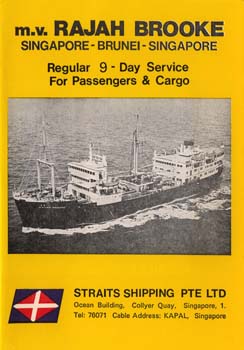
The Rajah Brooke was a sea going ship which would sail from Kuching government wharf to Singapore. It would take at least two nights for the ship to reach Singapore. The Rajah Brooke was both a cargo and passenger ship.


Most people in the 1950's used this ship and make the long journey to Singapore from where they would  board other liners and travel to Australia and even the United Kingdom.

My maternal grandmother told us that this ship looked like a four storey shop house floating on water. She was very imaginative and humorous about sea travels, having come from China at the age of 10 and then making another horrendous journey back to China in 1939 just before the Second World War. War was raging already when she reached China and she could not board another ship to come back to Sarawak.

In later years she had great fears of boarding a sea going ship like the Rajah Brooke or the Audy. In her heart she was truly afraid that she could not come home to see her loved ones again. Once was enough according to her. for the rest of her life from 1946 onwards she would never travel by sea to Singapore although she took the coastal ships and planes  from Sibu to Kuching, Miri, Marudi etc.


straits2
This is an advert from Sabah. (Google)

Most Foochows would board sea going ships like the Auby at Sibu . When they travelled many would get seasick, so they stayed in their cabin most of the time. Few would venture out of their cabins. Meals were provided at specific times . It was interesting that ships in those days sold tickets for first class and second class cabins.

According to my older relatives, many women actually lost  weight if they could not eat at all from Sibu to Singapore especially if they vomited a lot.


July 14, 2018

Sibu Tales : Pig's Tails with black beans

Image may contain: food

My grandfather was already in his 70's when I started getting to know him well. We were actually quite scared of him because he was a disciplinarian and would not be afraid to use the cane on his own children and any of the grand children.

However my grandfather had a charmed life. My father's stepmother (Grandma Siew) was a good cook who loved to cook for grandpa the best of food she could think of. So he was really blessed in his old age, a hardworking and good cook of a life partner who also gave him three more children.

One of the dishes she cooked for my grandfather was the steame pig's tail with black beans. I remember she would get my adopted aunt to cycle to the market to fetch a pig tail and she would cut the pig tail up and marinate in soy sauce. The tell tale black beans soaking in a bowl in the kitchen the day before would announce the special dish she was going to prepare for my grandfather.

This particular dish would be only for my grandfather's meal. We kids would eat first but when later grandfather sat at the table, he would call each one of us to his side and we would get a small piece from him and run away so happily to the garden or a corner of the house to enjoy the special "grandpa's meat".

It is fun remembering such little significant events of my childhood.

December 18, 2017

Cotton Flour Sacks - Memories of Yesteryears


This posting is dedicated to all my neighbours who lived in Kung Ping Road or Brooke Drive in the 60's. They will remain always in my heart as VIPs of my childhood and in particular Ah Chuo Pak and Ah Chuo Moo the parents of Andrew Ting Boi Hua who were the kindest people I have ever known in my life!


My Hainanese friend Ah Choon and I have great conversations and often reminisce about our childhood. And one of the stories we swapped not long ago was about our growing up years in the 50's when most frugal mothers and grandmothers would seek out cotton flour sacks to make underwear and sleepware for children!! Many mothers made rough quilts and sewed the pieces of flour sacks together as the reverse side.

I remember my neighbours the noodle makers (mien sien) - Ah Chuo Moo and Ah Chuo Pak - who used up more than 5 sacks of flour each day. Their children (some of whom are millionaires now) happily wore pajamas and shirts made out of these nice and really "tahan" or strong cotton materials. The cotton was so good that their pajamas never seemed to tear!

I carried a bag made from the flour sack and we had some nice pillows made from the cotton material. We used several to strain our home made soy bean milk. Another neighbour sewed pieces of these sacks together to form a nice huge awning over her small kitchen and yard. At one time after Woodstock young people started to wear little jackets fashioned out of them so that they looked hippies!! Those were the days when many Sibu people looked like John Lennon.

Indeed there were so many things we could make out of these versatile cotton sacks. Ah Choon remarked that even if we wish to have these cotton flour sacks today we cannot have them because the importers no longer use them. Instead they use raffia sacks. How we wish we could have them again.

Some things to share with you.


In the United States many women could still have the opportunity of buying some of these feedsacks from vintage stores.

Here is an interesting poem from the 1930's found on a very nice blog called "Crafter by Night". I hope she does not mind me borrowing it.......

1930 flour sacks
by Colleen B. Hubert

IN THAT LONG AGO TIME WHEN THINGS WERE SAVED,
WHEN ROADS WERE GRAVELED AND BARRELS WERE STAVED,
WHEN WORN-OUT CLOTHING WAS USED AS RAGS,
AND THERE WERE NO PLASTIC WRAP OR BAGS,
AND THE WELL AND THE PUMP WERE WAY OUT BACK,
A VERSATILE ITEM, WAS THE FLOUR SACK.
PILLSBURY’S BEST, MOTHER’S AND GOLD MEDAL, TOO
STAMPED THEIR NAMES PROUDLY IN PURPLE AND BLUE.

THE STRING SEWN ON TOP WAS PULLED AND KEPT;
THE FLOUR EMPTIED AND SPILLS WERE SWEPT.
THE BAG WAS FOLDED AND STORED IN A SACK
THAT DURABLE, PRACTICAL FLOUR SACK.

THE SACK COULD BE FILLED WITH FEATHERS AND DOWN,
FOR A PILLOW, OR T’WOULD MAKE A NICE SLEEPING GOWN.
IT COULD CARRY A BOOK AND BE A SCHOOL BAG,
OR BECOME A MAIL SACK SLUNG OVER A NAG.
IT MADE A VERY CONVENIENT PACK,
THAT ADAPTABLE, COTTON FLOUR SACK.

BLEACHED AND SEWN, IT WAS DUTIFULLY WORN
AS BIBS, DIAPERS, OR KERCHIEF ADORNED.
IT WAS MADE INTO SKIRTS, BLOUSES AND SLIPS.
AND MOM BRAIDED RUGS FROM ONE HUNDRED STRIPS
SHE MADE RUFFLED CURTAINS FOR THE HOUSE OR SHACK,
FROM THAT HUMBLE BUT TREASURED FLOUR SACK!

AS A STRAINER FOR MILK OR APPLE JUICE,
TO WAVE MEN IN, IT WAS A VERY GOOD USE,
AS A SLING FOR A SPRAINED WRIST OR A BREAK,
TO HELP MOTHER ROLL UP A JELLY CAKE,
AS A WINDOW SHADE OR TO STUFF A CRACK,
WE USED A STURDY, COMMON FLOUR SACK!

AS DISH TOWELS, EMBROIDERED OR NOT,
THEY COVERED UP DOUGH, HELPED PASS PANS SO HOT,
TIED UP DISHES FOR NEIGHBORS IN NEED,
AND FOR MEN OUT IN THE FIELD TO SEED.
THEY DRIED DISHES FROM PAN, NOT RACK
THAT ABSORBENT, HANDY FLOUR SACK!

WE POLISHED AND CLEANED STOVE AND TABLE,
SCOURED AND SCRUBBED FROM CELLAR TO GABLE,
WE DUSTED THE BUREAU AND OAK BED POST,
MADE COSTUMES FOR OCTOBER (A SCARY GHOST)
AND A PARACHUTE FOR A CAT NAMED JACK.
FROM THAT LOWLY, USEFUL OLD FLOUR SACK!

SO NOW MY FRIENDS, WHEN THEY ASK YOU
AS CURIOUS YOUNGSTERS OFTEN DO,
‘BEFORE PLASTIC WRAP, ELMERS GLUE
AND PAPER TOWELS, WHAT DID YOU DO?’
TELL THEM LOUDLY AND WITH PRIDE DON’T LACK,
‘GRANDMOTHER HAD THAT WONDERFUL FLOUR SACK!’

I think all over the world women in particular would have special memories of flour sacks. Thoughts of them just warm me up and help me value my old neighbours in Sibu even more!! Frugality and thriftiness are values we need to pass on to our next generation.

October 30, 2016

Sibu Tales : Halves

No automatic alt text available.


Throughout my childhood, I was surrounded by loving parents and relatives. they were good role models and their action spoke louder than words.

One special memory I had of my grandmother and my maternal uncles and aunts was their frugality which led to many " halving" of things.
1. Apples and oranges were not only halved but quartered so that more could be shared amongst the 14 kids or more in the big household. Sharing was a very important practice which we practice to this day.
2. Grandma would always buy biscuits, kompia and other snacks when she went to Sibu to sell the family smoked rubber sheets. And she would always tell us..."please share or halve the piece and share with the next one". When a child got a whole biscuit, a younger one would always ask, "Can I have half of the biscuit?" And the older child would always give half away. The act of giving was so meaningful and significant in those days.
3. After doing the laundry by the river side, the heavy load would have to be carried in pails back to the old wooden house. To enable every older sister or cousin, or aunt, to have lesser burden, we would always divide the loads into two. It was a joy to be sharing the load, with each one of us carrying "only half a pail of the washing" to be dried on the bamboo poles. Most washing was done before sunset. Sometimes the kids' clothes would be wind dried before sun rise. So there would be no worries about shortage of the small clothes for the small ones. Doing laundry by hand using the fresh river water was a part of our childhood which left a big imprint on my mind. Grandmother would always remind us to do laundry well so that we could all wear clean clothes. We were not well off but at least we were clean, she would always say. The older ones would always happily do the laundry for the younger ones with joy in their hearts.


4. During the Chinese New Year, we would never have a whole bottle of F& N orange all to ourselves. We would have to share. But after the 15th Day of the Chinese New Year we were all given a chance to share the booty, and my mother would allow us to divide equally the remaining bottles of drinks. It was indeed heavenly for us to be able to salt away 6 to 7 bottles of the lovely aerated water under our bed, for us to savour the drinks slowly. But some years when we had more visitors we did not have any left to share. Very much later, the novelty of aerated water dissipated and we did not hanker for any share at all.
4. Whenever we visited our grandmother in the down river farm house, my third uncle, Pang Sing, would make a huge bao or two, the size was  the size of a basin (2 kg), grandma would always call Aunty Yung to come and get HALF of the bao for their breakfast the next day, while most usually, another one was already steaming in the big kuali over the wood fire. In the evenings we enjoyed the extra aroma of steaming baos from the kitchen. Flour was so cheap in those days and grandma would always buy by the whole flour bag for less than 2 Straits dollars in the 50's and 60's. To give away half of something was a sign of generosity practised by our beloved elders in those days.

There is a famous English adage or proverb which says a Burden shared is a Burden Halved. So in many ways, our Foochow upbringing in those days paved for our cultural and Christian attitude to this day.

Our Christian Bible also ensures us that when we share our burdens with God, he will sustain us and lift some or all of the weight from our shoulders.

“CAST YOUR BURDEN ON THE LORD [ RELEASING THE WEIGHT OF IT] AND HE WILL SUSTAIN YOU;…” Psalm 55:22.


 and

“PRAISE BE TO THE LORD, TO GOD OUR SAVIOR, WHO DAILY BEARS OUR BURDENS.“Psalm 68:19

On the PRACTical side, many things were halved in the olden days. Milo tins would be halved and fashioned into containers for scooping water. Kerosene could be sold in half tins to the housewives who did not have the budget to buy a whole tin. And of course those huge tins of biscuits also come in half tins. Whenever my third uncle, being the stronger man in the family, collected a runaway timber log in the river, he would saw the log into two and older uncle Pang Ping and his family would have half of the log for firewood.

July 3, 2016

Sibu Tales : A Cabbage for a Lottery Ticket


This is a very old Sarawak Turf Club advertisement which was kept by my father in his drawer for a long time, 1961, when the numerical characters were still written in the old Classic Chinese style. I have kept it until now. My father was never a lottery buyer but he would get a few once in a while from his Singh friend. He would tell my mother, "I may not win, but it is one way of helping the ticket seller to get a bit of commission and to generally support the good causes of the turf club. My father in his life time never became lucky where horses were concerned.
No automatic alt text available.

The Chinese businesses in Sibu would print Calenders to give to their well wishers and customers. And Horse Racing days would be part of one particular kind of calender like the one shown. Horse races are all scheduled for each month. Very convenient.

I often think about lottery tickets and about how so many Foochows are reluctant to bet on anything. Perhaps this was due to the early responsibilities of the Foochow pioneers who were not allowe bad habits in the New Foochow, Sibu, as ordained by Wong Nai Siong and Rev. James Hoover. The Foochow pioneers were not allowed to gamble, womanize, smoke, drink ,and take opium. Lying was prohibited too. If caught committing these sins, they would be threatened to be sent back to China. I was told Rev Hoover did some some gamblers back to China.


Gee Jakee, a facebook friend told us the story of how a vegetable seller bought a winning ticket after he was persuaded to buy one by the Singh. Since he was not willing to part with his cash, the Singh suggested he paid with a head of cabbage. The vegetable seller won $400,000 and he was so happy that he gave Mr. Singh a special gift of money. Mr. Singh went back to India with his commission and the extra from the grateful vegetable seller. Mr. Singh eventually passed away at home.

That was a very princely sum in olden day Sibu!!

November 5, 2015

Sibu Tales : First Cars

The first car in Sibu was probably the car which was driven by the District Officer, or the Resident.

No one now had ever seen it. It must have been 1920's when the first car arrived.

But the stories were amusing and of course awesome.


There were also no photographs of cars of those days in Sibu.

For example, how did my father learn to drive in the 1940's. Who did he learn from? Did he learn to drive in Kuching?

Here is an amusing story: When the first car was driveng by the D.O. people were scared that they would be knocked down and die and instant death.

So many people then, walking along the road woud jump into the bushes whenever they heard the car coming towards them or from behind.

An uncle remarked "We were young then. It did not matter if the bushes were thorny. We wanted to save our lives!! When the car passed, we would heave a sigh of relief and mind you, our hearts were really beating fast. We were scared to death!!"

October 9, 2014

Sibu Tales : Saga Seeds

Most people have seen saga seeds and know that it is dangerous to swallow it as it is slightly poisonous.

But the seeds can be made into beautiful handcrafts by school children. Works of art can be displayed in school, during exhibitions etc.

Girls who have romantic notions like to collect them especially the Chinese girls because these seeds are called "think of love" seeds or siang zii dou.


But not many people have seen its beautiful yellow flowers. Have you?


July 25, 2011

Good things are wrapped in newspapers!!

My dad started off as a journalist in Singapore after he graduated and a few years later he founded a Kuching Chinese language newspaper. That  pre-war and unfortunate and  badly timed investment and enterprise was truly bombed in a way because the Japanese arrived on the shores of Sarawak just a few months after it was started. He not only lost a lot of money because he could not restart the business his  physical health suffered as he was badly beaten up by the Japanese when he was inprisoned (just three days). I think his heart just gave way after that. He died twenty years later from those beatings.

But dad never lost his love for newspapers during his life time. He made sure that we read well every day.

Now that's a horrible introduction to this post!! But that was exactly the background and reason why my siblings and I love reading newspapers and have a special spot in our minds for newspapers from various perspectives.

We love collecting stories and photos related to newspapers too....Like we would never forget the movie Angela's Ashes ..how the protagonist licked the oil off the newspaper or how newspapers were used to wrap food in Sibu etc....

Here are some photos of the old relationship between newspapers and Foochow toufoo......

I wonder how many people will remember this.

If you were born in Sibu and are now middle aged and perhaps even  older you would remember that you and your mother used to buy tou foo packed in this way. I have not seen this done in recent years in Sibu but I was delighted to meet this scene in Marudi recently.

I remember too that we would dry the paper (our reduce and reuse early years) and read the old newspapers and then stack them up to be used as "fire starters" on our Foochow stove. Old newspapers were useful for all sorts of other activities too.

Although Marudi is not exactly a Foochow town I was quite sure that the toufoo seller was a Foochow and I was right. But I cannot say that it is only the Foochows who wrap their toufoo in this traditional way. A layer of newspapers and then a layer of cardboard would prevent the toufoo from breaking up...especially if one is riding a bicycle and dangling a packet of toufoo from the handlebar!!

I have done that! Been there!


Today the traditional Foochow toufoo is still being made in Marudi by two men in particular and also ..at home. Thus the cottage industry is still thriving in a way but one of the vendors did say that his well educated son would not be carrying on his trade." No one wants to learn this any more!" he said.

Tofu or bean curd is a food made by coagulating soy milk and then pressing the resulting curds into soft white blocks. There are many different varieties of tofu, including fresh tofu and tofu that has been processed in some way. Tofu has a very subtle taste.

Tofu is thought to have originated in ancient China. It has spread to other parts of Asia. (Wikipedia)


May I am wrong, but the photo above shows the Foochow Tou Wan, or South East Asian tofu cake.......very good for making salads in a fusion kind of cooking. (See my future post on this...)And stir fried with some minced meat it is an excellent dish. Whenever I see this I would dream of my mother's Foochow meatballs which is one of a kind in this world.

Is it true that tou foo's texture is different from one locality to another because of the quality of the stream or spring water? I would like to see Sarawak rivers to become unpolluted again . If it is only to make the best toufoo in the world!! Please...Sarawak can/boleh!! Boleh? Can?

May 14, 2010

Sibu Recreation Club

Image may contain: house and outdoor

the Sibu Recreation Club was started by the Colonial officers and leading community leaders in the 50's.

Upstairs was an open space for dancing, with a small raised platform acting as the band stand and also for the PA system and microphone with loudspeakers.

Downstairs was also another open space with four mahjong tables, a bar (from where one could order coffee, tea, toasts, and alcholic drinks). If I am not mistaken the man who was given the tender was a Hainanese. He also had a steamer, in which he steamed siu muai and some other dim sum. He served his dim sum with chilli sauce, tomato sauce and mustard (upon request)

The SRC was where I had my first taste of English mustard.

On the side there two tennis courts where police officers and the colonial officers played tennis aftger office hours. They were all very well dressed in white shirts and shorts.  When the sun set, they came into the club to have their beer.

It must have been good to be a member of the SRC.

Ferry - Labuan - Limbang - Lawas

  In 1974 I started my teaching career in SMK Limbang. I had completed my degree and diploma of education in 1973. When I asked for a postin...