October 31, 2019

Marudi : Cabbage Rolls


It was a very interesting walk around Marudi when I chanced upon a shopkeeper laying out several dishes on a long table on the five foot way. She was a good cook, as she had several dishes on the table for her children who must have come home from strenous playing. It was school holidays and I was in Marudi for just a break.

The shopkeeper was Foochow and she was so polite as to invite me to sit down with her and her children. It is a true mark of Foochow courtesy extended to travellers. It is the traditional habit of foochows to provide a meal for people who walk a long distance from somewhere (and to another place).
No photo description available.
(Photo taken 29th October, 2014, Five Foot Way Lunch, Kampong Cina)


In fact many old Foochow travellers in the olden days who asked for directions would often be offered tea and even a bowl of noodles. My maternal grandmother was very generous. Any one passing her house in Nang Chong and it was past lunch time, would be invited to have at least some rice with vegetable soup and some salted pork. Many people remembered her kindness and in her later years, they would pay for her bowl of fish balls or noodles in town if they met her.

This traditional Foochow hospitality is something I do have as a Foochow. Foochows who are Methodists practise the teachings of John Wesley and the teachings of Confucius, carry on this kind of love for their fellowmen.

"To be able under all circumstances to practice five things constitutes perfect virtue; these five things are gravity, generosity of soul, sincerity, earnestness, and kindness."

By the way, I did not eat a whole meal with the shopkeeper but I did taste her cabbage roll. She was very happy that I tried. I won't forget her kindness.

October 30, 2019

Mukah : Ek Hua Primary School


The Ek Hua Primary School of Mukah was established in 1927 by four Chinese pioneers, Tai Ah Suok, Kueh Chi Ming, Ho Tian Chai and Kueh Woo Sien.

The school used the Fook San Temple (established in 1917) before the school building was completed. Its first Headmaster Mr. Ho was specially recruited from China by the management.

Closed during the Japanese War it was reopened in 1947 and is still a small but vibrant primary school serving the Chinese, Melanau and Iban communities today.

The school is situated in Kampong Panakub, the first Chinese settlement of Mukah, which is also called Kampong Cina. It is one of the few Kampong Cina in the coastal regions of Sarawak. The Chinese chose the upper reaches of Sg. Tellian, the life line of Mukah people, to settle down. This was most probably due to their fear of pirates, floods and strong sea storms.

Source : United Daily News. 2013, Oct 25. Page 5 ( from Dr. Wan Kong Ann)

October 29, 2019

Mukah : Ready Breakfast

In many small towns, little food stalls have "ready" breakfast on the table.

The food mainly kuih, pulut panggang, bao,tapai , cakoi, nasi lemak, porridge and hard boiled eggs are placed on the tables. Any one  sitting at the table would pick the food and pay later. A drink like hot tea or coffee is ordered. A small stall with 4 or 5 tables would have a brisk morning's business, served probably by one man or woman (the stall owner).Image may contain: food

This  market eating stalls in Mukah are always full of people. Men and women who came to the market early in the morning to buy the best fresh fish would enjoy a good breakfast without any fuss. Sometimes during the holidays children will come with their parents or grandparents, making it a good day's outing.

For some senior men, it could be a coffee morning, every day.

Image may contain: food
His definitely has his loyal customers.

Choose and eat is a very traditional way of serving customers in small towns.

Image may contain: food and indoor

The food offered is very delightful and really warms the heart. There is no cooking facilities. Only coffee and tea making facilities.

October 28, 2019

Mukah : Umai

Mukah is a small town in Sarawak and has many historical significances.

The name itself might have come from the word "muka" or face in the local langauge. But it is most probably named after the river as it is found at the mouth.Image may contain: food

The raw fish dish is a favourite of the Melanaus who are the main ethnic group of this area. Umai is made from freshly caught fish like ikan empirang, duai (pomfrte) and tenggiri (mackerel).

Image may contain: food
There are more than 15 stalls which sell freshly made umai at 10 ringgit a box. This is the unique feature of Mukah town. No where else do fishmongers prepare slices of fresh fish for umai and sell in this way.

Recipe for Fish Umai :

1 kg fresh tenggiri or duai puteh (pomfret) or any white fish. Ikan empriang is the best.
Juice of 2 lemons 
Extra 1 or 2 tablespoons of good vinegar if you like
Juice of 15 green limes (limau kasturi)
1 bud of bunga kechala or kantan (wild torch ginger) finely sliced
5 small onions - finely sliced
3 red chillies, deseeded and finely sliced
Coriander leaves
daun sup (sawtooth coriander)

Slice the fish flesh very finely and mix with salt, lime juice and lemon juice
f.  Cut chillies
g. Salt+ pepper to taste
h. Coriander and /or daun sup
Slice the fish fillet very finely and mix with the salt, lime juice and vinegar. 
Add sliced bunga kechala, coriander, daun sup, cut chillies. Mix well and chill in fridge for 20 minutes or until the fish turns white.


October 27, 2019

Family : On Wings of Love

Image may contain: food

My Aunt Pearl, who married into a large family had plenty of stories to tell when she was relax and happy with every one. She had a lot of burden on her shoulders being the eldest daughter in law, as it was normal in a traditional Foochow family.

Furthermore, she was one of the first ladies in Sibu to be a career woman, holding a position as an accounting in a business. She was quite a masterful person in town.

She told us that in most Foochow families, the girls would be given wings to eat because they would soon fly away. The boys and the head of the family would always get the drumsticks.

My aunt laughingly told us that if we wanted to be masterful, we had to eat drumsticks to stay strong and powerful. However my mother beat all odds and she would give us girls drumsticks, by turn. We did not have to wait for our birthdays to eat drumsticks.

One piece of chicken Aunt Pearl disliked most was the breast meat, which I particularly liked in those days. She told me once that when she was first married and she was given a piece of breast meat she almost burst into tears because it indicated how the family placed her at a low position. But later she laughed about those incidents in her life.

Some how, we nieces just loved to eat wings. We were not thinking of flying away as soon as possible.

Years later the Sibu chicken market started to sell chicken parts and my mother would enjoy just buying chicken wings for all of us.

Today, it does not really matter for every one could just buy chicken wings, from KFC, or from the bbq chicken wing stalls and eat to our heart's content especially if we have our own money.

October 26, 2019

Pineapples

Image may contain: plant and food

As a fruit it is highly valued in Sarawak.

All the different races of people of Sarawak enjoy cooked pineapples too in many different kinds of dishes.

Fresh pineapples can range from very sweet to sour and there are several species of the fruit in Sarawak. There is nenas paun, as well as Sarikei pineapples (show in the photo), Bario pineapples and honey pineapples and others.

In the olden days, it really depended on family upbringing who would get ready fruits like pineapples, coconuts, mangoes, apples for the family. In my family, it was always my father who would lovingly prepare the fruits. He was good with his well sharpened knife and I would always remember how he pared apples for grandfather who was admitted at the Lau King Howe Hospital. He was really quite impressive!!

Even in those days as a very young girl I wished that all men should be able to pare apples, clean pineapples, cut papayas, watermelons for their families.

October 25, 2019

Sarikei : Special Charcoal Toasted Bread

Image may contain: food


The Aik Seng Coffee shop of Sarikei has more than 80 years of history as it was started by the Wong family who originated from Changle, Fujian. Today the shop is run by the second generation.

The charcoal stove which toasts the bun for the roti kahwin is just as old.

According to local history, GRandfather Wong was one of the victims of the Pulau Kidjang tragedy, a maritime disaster of enermous gravity. More than 200 victims perished. Many bodies could not be identified and even more passengers were never found. There was no manifest to check with. Today an unmarked grave in the Kwangfoo Cemetery remains solitary and melancholic.

Every visitor arriving in SArikei would make a bee line towards this coffee shop for a taste of the kaya and peanut butter and real butter roti kahwin and enjoy their Kopi.


Image may contain: drink, coffee cup, indoor and food


In a visit recently we were taken to the coffee shop by Dr. Lu Chan Woon and the Chinese community leader.
Image may contain: 3 people, people sitting and indoor

It was a lovely visit to Sarikei.

And of course no visit is complete without tasting roti kahwin of Aik Seng.


October 24, 2019

Foochow Merng Goh and A Cup of Soy Bean Milk

When my maternal grandma came to Sibu, she would take the slow single storey motor launch from Nang Chong early in the morning. It would around 6 a.m and if the tide was low, the current would be flowing out to the South China Sea. That meant that she would arrive later by half an hour or even one hour. She would reach Sibu by 8.

The motor launches competed with each other but it was quite a friendly kind of competition.  there were around three motor launches coming up the river from mid valley. One would come from Sarikei, picking up passengers and goods from Bintangor. This one would reach Sibu the latest by ten. It would by past all the Chinese villages and the Iban longhouses.No photo description available.

So the Sibu Tua Pek Kong wharf would be really busy with in coming boats at about 8.
Image may contain: car and outdoor
(My maternal grandmother would stand to have her post river boat ride at the corner there. Today it is a busy place.)


The corner of Market Road and Island Road had a few hawkers' stalls selling kuih and soy bean milk for those travellers who did not have the time to sit in Moi Suong Coffee Shop and other places.

My grandmother had two choices. To have fish balls at Lok Tieng Yuen or to have a Merng Goh and a cup of Soy Bean Milk. She would have the latter because she wanted to give her relative some business and to catch up with family news.

The Merng Goh at the corner has always been the best in my memory. I would always have the white one.

Lok Tien Yuen's fish balls might have to wait.

October 23, 2019

Sibu Public Health in the 1950's and 60's

Since 1952 the Council had assumed the responsibility for the maternity and child health services. It started with two (2) trained Assistant Health Visitors to run the Clinic under the supervision of the Divisional Medical Officer.

My mother brought my sisters and brother regularly to get our injections at the MCH clinic while she herself attended clinics for mothers. She had 7 children in 7 children in 11 years.

In 1968, SUDC Clinic had a Health Sister, two (2) Senior Staff Nurse, a Staff Nurse, a Senior Midwife, eight (8) Midwives, six (6) Assistant Visitors, a Laboratory Technician and two (2) Clerks.

Night call service was provided and attended by trained midwives. The maternity and child health services were taken over by the Medical and Health Department in 1979.

Midwives cycled to attend to birth even at night. They took over from the barefoot midwives from the different communities. Amazingly after the Second World War, the infant mortality rate in Sibu area was not high at all.

Image may contain: house and outdoor

The Council did not have its own Health Inspectorate until 1957. The responsibility was solely carried out by Health Inspectors from Medical Department under the Divisional Medical Officer. The work was done in close cooperation with the Council staff. In 1958, the Council started its direct service after securing a Senior Health Inspector on secondment from Medical Department. It had its own Health Superintendent in 1963. Health work in the Council was then set up on a sound footing. Ever since, there were significant progress in many fields, such as environmental and sanitation.

October 22, 2019

Sibu History : Wong Chu Hua

No photo description available.

This is Wong Chu Hua, standing next to the young Ting Lik Hung.

The word DRESSER is an old English word used in Sarawak during the Colonial days, and right until very recently it was still used to refer to Medical Assistant in the government hospitals. Many dressers in the early days were experts because of their training and hands on experience.

And Wong Chu Hua was one of them.

Wong Chu Hua was a well respected and well remembered hospital dresser with the Lau King Howe Hospital, Sibu. He was so good that he was called a doctor by the Foochows especially. In the 50's and 60's Sibu Lau King Howe Hospital (now Lau King Howe Hospital Memorial Museum) had only 55 beds. It was too small in fact to handle so many patients who needed medical care from the whole of the Rajang Basin. 

Historical records do not show good medical health care in Sarawak. In 1947, there were 21 rural dispensaries attended by a dresser and an attendant. In fact the Kanowit dispensary (which I used together with my students in 1975) and Saratok dispensary were opened in 1953 and 1960 respectively.

 The total annual workload of these dispensaries were 130,000 patients. In 1947, the colonial government allocated grant for the setting up of two rural dispensaries and 16 mobile dispensaries.

Sibu was lucky to have a Lau King Howe Hospital from 1926! And the people were lucky to have dressers like Wong Chu Hua. He was so good and helpful that he was even recognised as a doctor. People from the villagers called him Doctor.

After he retired, he set up a clinic at his home in Tong Sang Road. He saved many people's lives, especially children. Two of his daughters were midwives in private practice.

Photograph taken by my father, Chang Ta Kang.

October 21, 2019

Matu Daro Oya


Matu, Daro and Oya are three coastal towns of Sarawak. Oya is found at the mouth of the Oya River. Daro is found at the mouth of the Rajang, flowing into Muara Lassa. Matu is between Oya and Daro.


Daro is a small town with about 20,000 people, mainly from the Melanau community.Related image
(Photo of Daro)

Matu is a small town with two rows of wooden shop houses. It is reachable by road and by coastal boats.
Image may contain: cloud, sky, tree, outdoor, nature and water
(Oya River)

Oya is the town next to Mukah. It is connected to Dalat which is connected to Sibu by the Kut canal. Travellers from Mukah would go by road to Oya and the Dalat in less than an hour, and then take a speed boat to Sibu, via Kut canal, Igan River. This takes about 2 hours. It is an adventure by river!!

Dalat's Chinese Temple.

Dalat is a nice place to visit. However remember no shops would be opened after five p.m. So have your dinner before that time.


October 20, 2019

Sibu Tales : Winged Beans

Image may contain: plant, food and outdoor

Winged beans or angle beans are easily grown in one's backyard in Sarawak. One plant can provide a family with fresh beans, almost every day.

(Psophocarpus tetragonolobus), also known as the Goa beanFour-angled beanFour-cornered beanManila beanCigarrillas, and Dragon bean,.

It is a legume plant. Its origin is most likely New Guinea.

when we were young we did not like it very much because it had a "green" taste to our tender buds.

My mother normally cooked it with lots of garlic in the Foochow style.

These beans are nice when cooked with pounded dried prawns. It can be added to curry fish head. But it is most healthy
 to just boil the beans slightly and serve,

These beans can be sliced thinly and be added to fried rice. 

Eating he beans raw is commonly done in Malaysia.

October 19, 2019

Sungei Merah : Soy Bean Sauce Factory

There were two soy bean factories in Sungei Merah in the 50's and 60's.

Wong Cheng Ang was my father's buddy from young. He was born in Sungei Merah and his mother was a wealthy rubber planter. She was widowed early but her wealth enabled her to send all her sons for college and university education in Hong Kong and China.

Cheng Ang went to Beijing with my father and graduated with a degree in Chemistry from Yenching University.
Image may contain: 1 person

He was a very interesting man. He became a Headmaster of Tung Hua Secondary school for a short while before the war and soon he married my mother's best friend, TongYien Chuo . They had two daughters.

Cheng Ang was interested in making soya sauce and he set up a factory along the present Kwong Ang Crescent. We visited the factory which was full of earthern jars in the 50's and early 60's. By that time he was married to another lady, another family friend. He had a few children from his second marriage.
Image may contain: drink
Each time I see this kind of jars, I would think of my visits to Grandfather and Uncle Cheng Ang's family in Sungei Merah.


My aunts remember him well and were fond of him. My grandmother Siew was also very fond of him and often asked him to stay for a meal after he paid my grandfather a visit. From their recollections, we learned also that he loved good food. My grandmother Siew was a good cook.

One story was this: he had some pig stomach soup with my grandfather. He found it so good he sent his new wife to ask my grandmother for the recipe. Unfortunately, she did not do a good job and found the raw stomach too much to manage. So she told my grandmother, "Next time you cook pig stomach, call my husband to eat." I think she was a strong believer of "Love your neighbour."

In 1962 he left Sibu to go to the jungle and was tragically killed by the army in 1972. My father lost a childhood buddy and was extremely sad when he heard the news.

My father said quietly, "He had so much to offer to the world, an idealist, an educated man, yet he chose the unusual path, knowing that death would come sooner than later."


October 18, 2019

Father's Lucky Strike

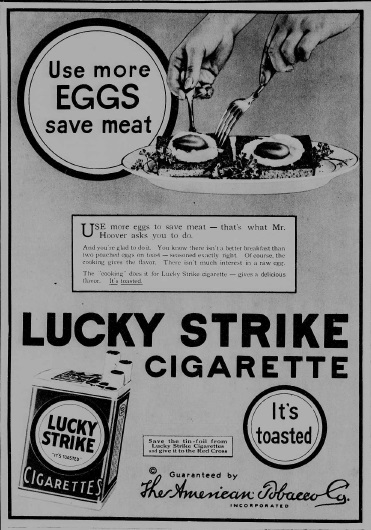
Image result for Sarawakiana reunion after 60 yearsMy father smoked a bit, and well controlled by frugal financial adjustments as he had 7 children to feed and a very frugal aging father who also smoked a bit. Cigarette smoking was a kind of habit for these two men. I remember them sharing time and cigarettes in the backyard as they discussed things. They had plenty to talk about.


Related image

Though I cannot remember what brand my grandfather smoked, I suppose any brand would do for him. In those days when men met, they would extend their cigarette packets to offer a cigarette to a friend as a gesture of friendship. As a child I thought that it was a very interesting gesture.

However, my father insisted on Lucky Strike because he said that it had more tobacco. He sometimes would decline people's offer and he would take out his own...while others would not accept his Lucky Strike because they said that the cigarette was too "strong" or kau. Was it some kind of Foochow "ettiquette"? If you have your own, just don't accept another person's? Well, that was the social grace of that time.

"I have my own" became an interesting statement to my ears as I slowly became more aware of the social do's and don'ts of those days.

Later my grandfather gave up smoking because he was coughing too much.

Now that I cough a lot my mother would say, "You are like your grandfather."

I cough whenever I am with people who smoke.

Going back again to Lucky Strike, we kids learn a lot about cigarettes from the advertisements in Reader's Digest.

From Wikipedia : The Lucky Strike brand was introduced as chewing tobacco in the United States in 1871 by the company R.A. Patterson. The brand's founder was inspired by the era's rush for gold searching. Only some of the gold diggers (about four out of each 1000) were fortunate enough to find gold and this was often referred to as a "lucky strike".
By choosing this expression as the product's name, it implied consumers who were choosing the brand were lucky, as they were choosing a top-quality blend. Despite originally being a brand of chewing tobacco, by the early 1900s, Lucky Strike had evolved into a cigarette.
A well-circulated myth is that the name "Lucky Strike" refers to the fact that some cigarette packs contained marijuana, thus getting a "lucky strike" in receiving one of these. This, according to Snopes, is considered simply an urban legend, and not true.[2]

October 17, 2019

Sg. Sian, Bintangor

Before 1921 there were no Foochows in the Bintangor or Binatang area. Tiong Kung Ping, Yao Shiao King and Ling Ming Lok founded the Foochow settlement of Binatang having received a grant of land from the Rajah, with the help of the Reverend James Hoover. The three pioneers spearheaded the rubber growing program in the area while several Foochow families from Sibu and China settled down there.

Soon another area, Sg. Sian (The Chinese name of this river is "City River") was established. The land was rather low lying.


Land price has increased and land has been developed into agricultural plots since vehicles can be transported by the ferry that travels between Bintangor and Sg Sian.
Small road and newly opened land in Sg. Sian (Photo from Borneo Post) According to my Grandfather, all new land owners had to dig trenches 6 ft wide and 12 ft deep to form their land demarcation before they started planting their rubber trees, a decree from the Rajah. 

Image may contain: 1 person, sky and outdoor
Wong Meng Lei and siblings in front of Ming Dao church and Ming Cheng Primary School

But in a few years the Foochows overcame many challenges and successfully grew tangerines, pineapples, some other fruits and rice.

A church Ming Dao Church and a primary school, Ming Cheng (1936), were established by these villagers. Ming is the Chinese character taken out of the Bin (Ming) atang of the name of the town.

No photo description available.
Photo from Sarikeians. Sg Sian Ferry brings home villagers every evening
My friend Wong Meng Lei's parents first taught in the Ming Cheng Primary Schoolin the 50's.
Today Sg. Sian continues to thrive with more agricultural development, including oil palm planting.

Engkabang or Illipenut

It is said that there are 7 species of engkabang or illipenut, one of the most famous exports of Sarawak during the Colonial Days, before Malaysia was formed.

The Ibans have named them thus: engkabang jantung (Shorea macrophylla), engkabang bintang (Shorea splendida), engkabang gading (Shorea helmsleyana), engkabang terendak (Shorea simins), engkabang asu (Shorea palembanica), engkabang rusa (Shorea stenoptera) and engkabang langai bukit (Shorea pinanga).

To make oil from these winged fruits, follow these steps:

No photo description available.


1. take off the skin from the fruits and dry for at least 48 hours.
Image may contain: food

2. Crack the nut and take out the kernel.


3. Boil the kernels until they are soft.
4. Press or pound (using a wooden pestle and mortar)
5. Pour the oil into bamboo stems and let it solidify.


Image may contain: food and indoor

No photo description available.

This tree butter is excellent with hot rice. Enjoy!!

October 16, 2019

Bintangor : The Mahjong Room

In the old days in the 60's, there was a Mahjong Room on the first floor of my uncle's shoplot in Binatang.

It was run by a distant uncle, Tiong Dan Yew, a friendly and humble man who was well liked by every one, especially the Foochows.

Image may contain: indoor

One of the memories his daughter had of him was the way he would give destitute men some cash for a good meal. It was well known in Bintangor when poor men needed some help, they could go up to the first floor of the corner shop house and ask Uncle Dan Yew for some cash for a meal. It was a quick fix for a poor man in need of a meal.

He would say to the man, "Go and fill your stomach. Work harder!"

Uncle Dan Yew was in charge of Mahjong room. His small income came from the revenues he obtained from the tokens given by the players and a small supervisory salary. In the 1960's and 70's there were already a few table of Mahjong kaki in Bintangor.

Uncle's wife was a dressmaker and his daughter, Nguok Hiong, also a dressmaker and embroiderer (that was very popular in those days for with good training, she was tasked with making of embroidered pillow cases and bed sheets for Chinese weddings).

They lived in the back portion of the first floor and offered their tailoring services there. My cousin, the only daughter, married a Mr. Lau, later moved to Miri.

I have always loved the clicking sound of the Mahjong tiles.

October 15, 2019

The Indian Muslim Merchants of Kuching

Yes there is an India Street in Kuching.

It is a pedestrian walkway of variety of colorful textiles, clothing, crockery and other essentials in a manner not changed much in the past decades. Jalan India is lined with shops selling all kinds of goods, particularly textiles. Mid-way down Jin India (if you can find it!) there is a narrow passageway that leads to Jin Gambier, where the fruit, vegetable and fish markets and the spice merchants are located.

What is very interesting is a small hidden gem right in the middle of this busy part of the city. If you follow this passageway you'll pass a small Mosque hidden away in the middle of the city. The Mosque's structure has undergone many changes since it was originally built by Kuching's Indian Muslim community in the mid 19th century.

The mosque is very unique and you will be able to observe closely as it is open to the public. But do show due respect when you look around.


Gambier Street is also near the waterfront


There are a number of Indian Muslim shops on Gambier Street selling spices and Muslim produce. This is an interesting place to catch the sights and smell of old Kuching.


It is a good place to spend an enjoyable afternoon.

October 14, 2019

Iban Beliefs : Healing plants and medicinal oils for New Mothers

All these plants are very relevant for the new mother in the long house. If the new mothers are residing in the town or city, they might find it difficult to get them.

Daun Mambong - for bathing. The Chinese sin seh have already packaged them for the urbanites. So you might be able to buy the leaves in Chinese medicine shops. Ask for leaves for confinement bathing.
Image may contain: plant, tree, outdoor and nature


Pucuk Paku Uban - eating this is good for the new mothers to encourage lactation.

No photo description available.
Minyak entemut/kunyit


Image may contain: plant, nature and outdoor


Pound the entemut or wild kunyit and add some oil, for a refreshing massage. Good for blood circulation for new mothers.


Halia Merah - use this for cooking chicken for new mothers.

Oil infused with the wild red ginger is good for blood circulation too.


No photo description available.

No photo description available.

The Indonesians also believe in the use of red ginger as a good nourishing confinement dish.

October 13, 2019

Japanese Sago Palm (cycas revoluta)


These attractive, low growing plants are not palm trees but cycades, a group of ancient tropical and sub tropical plants.
Very often they are grown as houseplants.Image may contain: plant and outdoor
they are so growing that it grows probably at 2 feet in five or six years.
Good for any one interested in having a good collection of houseplants, indoors or outdoors.

Interesting this palm, found in Southern Japan (Kyushu Island) produces sago.

October 10, 2019

My Grandmother, a Match Maker.

How my grandmother saved the life of a child bride.

1946. When a child bride arrived in Sibu by boat from China and was rejected, what could be the consequence? That poor girl would be totally lost with no one to turn to. She was only 15 but 16 according to the Chinese age. Her potential bride groom had given her one look from a distance and he had rejected her on the pretext that she was very ugly. In fact he was already in love with another girl whom he met after the war.

There would be a kind of Foochow Association to take in the needy, but girls left alone was something the society would commisserate. A few kind words here and there and finally she was asked to go and see my maternal grandmother for help. My grandmother was known to be a kind lady who could help and she had a big house to taken in even strangers from Mainland China.

One uncle XXX   XXX  Kwong one day had said about destitute girls in this way when too many of them were in some kind of trouble...He had bluntly, said, "Jump into the Rajang River. That would solve a lot of our social troubles."

He must have been joking. I was definitely not amused but he had a point being such a chauvinistic man..girls in trouble should just end their lives in the river. Indeed many women committed suicide that way for many reasons, apart from having an illegitimate child.

But my Ngie mah did not allow anything bad to happen to the young 15 year old............


The Foochows continued to migrate to Sibu even after the Second World War.

Many child brides continued to arrive as they were "booked before the war". My maternal grandmother decided to adopt this girl who arrived in 1946. She was bought as a child bride for a nephew . . My grandmother took pity on her and took her in.Image result for Sarawakianaii.blogspot.my My mother

My grandmother too was a child bride and she too felt that she was not exactly a very pretty girl.

Soon she became a companion to my mother and her siblings, working hard and helping out. Every one loved her, she was only 15 years old, far from her homeland, and in fact living with relatives. How much rejection did she feel? It was unfathomable.

But she was a cheerful girl according to my mother. Two years later, in 1948 my mother married my father and soon, Aunty Lang Ing was bethrothed.

It was God's plan indeed for out of the blue, my grandmother found a great match for her. It was quite impulsive of her. One day  my grandmother suddenly thought that 18 year old Sung Nung (her godson) should get married.

She approached him as he was working as a carpenter nearby.

The shy Soon Nung (not exactly a handsome man) was only too happy at the suggestion!! According to my Grandmother he did not even look at her when she mooted the idea and with head bowed he just whispered a Foochow phrase meaning, CAN.

And immediately a plain ceremony was arranged and they were married by the Methodist Pastor of Nang Chong, papers were signed and she was taken away to Sung Nung's workplace.

 Both of them were so grateful to my maternal grandmother. My paternal grandfather engaged the couple for a year in the Hua Hung Ice Factory but Soon Nung was offered a better pay and a position in a Sg. Salim farm where both of them could work together for a living.That was the last time my mother saw the two until a miracle happened in Kuching half a century later.

Was she happy? She must have been as she travelled all over the Rajang Valley, raising her children and remaining a good wife to Soon Nung who continued to work as a carpenter with timber camps.

Stay tuned...for Part 2...Aunty Lang Ing in Kuching.


October 9, 2019

Mah Ni Cao or sarang Naga

lycopodium cernnuumImage result for lycopodium cernuum
Mah Ni Cao or Sarang Naga

This is commonly found in most hilly places in Sarawak.

It was often uised by wreath makers in the olden days. Mrs. Mary Hoover was the teacher who taught many Foochows to use this fern when they need to prepare wreaths for funerals.

My grandfather was often the man who would prepare the wreaths for church funerals as he was very good with his hands and he also grew a lot of flowers.

He would make a ring with wires and then he would wind and twist the mah ni cao around the wires until the ring became very form. After that he would pin or stick the flowers on the the ring.
 No photo description available.

the Methodist Children's Home has often been the source of wreaths for many Methodist funerals. Today florists in the town make a big profit making wreaths for funerals.

I remember one funeral when the Rev Ho Siew Liong in Sing Ang Tong called my grandfather up to the front of the church to present a wreath. He was a tall man and he stifly went up, bowed and then placed the wreath on the coffin. It was a beautiful wreath which he made from Mah Ni Cao, purple bouganvillea and yellow alamandas. I was so proud of him.

October 6, 2019

How to make Rose Water

Thinking about making your own Rose Water?
Image may contain: flower, plant, outdoor and nature

Here is a simple recipe. Homemade rose water can be used as a natural skine toner, or mixed with glycerine to create a soothing and healing moisturizer.

It can be used as an ingredient in homemade soaps, lotions and skin care products.

You will need the following
Rose petals (1 cup)
Heat resistant glass bowl with lid (e.g. pyrex )
Rain water
Cheesecloth
Wide mouthed glass jar.

1. Boil 2 cups of water and pour the hot water over the rose petals.
2. Cover the bowl with a lid and let the rose petals steep for 30 minutes.
3. Cover the wide mouthed jar with a piece of cheesecloth and pour the rose water into the jar.
4. Discard the rose petals.

(Recipe copied from Google)

Ferry - Labuan - Limbang - Lawas

  In 1974 I started my teaching career in SMK Limbang. I had completed my degree and diploma of education in 1973. When I asked for a postin...